Life. Support. Music.

At last month’s brain aneurysm support group, we watched a documentary about a musician from New York City who, against all odds, survived a ruptured AVM. Through the amazing support group around him including family and friends, he was able to not only recover, but prove most of the doctors wrong with their devastating diagnosis’.  Watch a brief follow-up online about the documentary with Jason and his sister HERE.

Tonight, we were able to meet Jason Crigler in person, hear his story first hand, and ask him questions. There truly aren’t enough descriptive adjectives to convey what one feels after hearing and seeing Jason’s story.

In 2005, soon after he returned home from a year-long stay in the hospital, Jason's family (his daughter, wife and father) take him for a walk in the woods.

He is a soft-spoken, warm, and funny man. If you didn’t know his story, one would never know the extent of the struggles he and his young family have had to endure.

Jason’s story was documented by a friend who video taped much of his early recovery and made it into a critically-acclaimed documentary called LIFE. SUPPORT. MUSIC. It’s painful to watch, especially as a survivor of a brain injury myself. He could be me…I could be him. The uphill battles are all very similar, but Jason was very motivate to recover with a new-born baby girl, a budding music career in New York City and a family that sacrificed their own lives and comfort to care for him on an hourly basis.

Tonight was very special and it’s a damn shame more people (even from our own groups) could not attend this widely publicized event. The old adage, you can lead a horse to water but you can’t make him drink, held true tonight I guess. You get what you give…and some people give more than they have to give, but receive very little in return. It’s a damn shame.

Jason’s story is a story that needs to be heard and obsorbed. I only wish I could speak as eloquently and effectively as Jason does, or I’d take my little stent, coil & clip show on the road too. But who the hell would show up to listen to me? Probably only just a few. I know my story isn’t nearly as compelling. We can’t even get an article written about our group.

There was one article written a couple of years ago. About a woman who only came to our meetings maybe two times. She was certainly very attractive & photogenic and lived in an influential area, so that right there was two up on me. Even the one small TV spot we DID have ended up being shared by a completely un-related disease, so we couldn’t even get a full 2-minute spot for ourselves. Really? What DO we have to do????

But…even if we did…would it make any difference? We met a few new people tonight and we welcomed them with open arms as we always do. I hope we see them again and that they spread the word about our group and our efforts to raise brain aneurysm awareness in the state. Exposure could save lives….WE could save lives.

I think you’d be hard pressed to find a group like ours (or at least that one special person) that gives such personal attention to those who have reached out to us. I don’t think the president of many organizations would send personalized emails complete with moving letters and related photos to someone who writes and donates and expressed great regret they’ll be unable to attend this year’s event after having attended all of the other previous ones. I think it’s the personal touch that sets us apart from other groups. The behind-the-scenes workings are amazing and the hard work that goes into every event, every email, every newsletter, and meeting follow up, is more than most are doing. Does it matter?

People need to DO more. They are not and it could mean lives of people are being lost as a result. Picking up food for an event will feed the volunteers and participants. For one day out of YOUR life, you could help an event run smoothly and make it a success, meaning those who attended and those who heard about it and read our materials will remember what the event was about and LEARN….and potentially save a life of the next person who has the “worst headache of my life”.

(stepping down off my soap-box now)……back to Jason Crigler.

Jason’s positive & simple attitude about his AVM and recovery is truly inspirational. Many things he spoke about tonight touched me deeply and certainly would have touched a lot more people if they had taken the long hour and a half out of their busy lives.

One thing he said was that there is “strength & power in thought”. We can choose to think we’re failing or think we’re succeeding and it can truly effect the rest of your body. He admits to bad days and depression and despair just like the rest of us, but it’s reminding yourself of the struggles you HAVE overcome and how far you have come that one needs to be reminded of. We all have struggles on a day-to-day basis, but it’s how you deal with, and think about them, that can lead you to a path of strength and power.

I needed to hear those words tonight. My 10-year Annie-versary of my ruptured brain aneurysm is coming up on Oct. 4th. I’m lucky to be here. I know that. I also know others haven’t been so lucky and if sharing my story can save one life, I’m going to do it. If complaining about a lack of support can garner a little bit more, then I’m going to do it.

My sister died from a ruptured brain aneurysm. I had to see her lying in a hospital bed completely unresponsive on a ventilator, with her head shaved, with wires in her open skull and a drain relieving blood from her brain. She was basically gone at that point but we held out hope for a miracle. It never came. I may have failed saving my own sister in educating her enough on the signs and symptoms, but I MAY be able to save one other person. I MAY be able to help one person recognize the symptoms and get them to a hospital in time.

I have to hold on to that…otherwise, why was I saved and Dori wasn’t and why was I saved and Dave’s beautiful 32-year old niece Kim wasn’t? Two beautiful, sweet, funny souls who did nothing but good for others. I’m not nearly as beautiful or sweet, so I have funny going for me…and a chance to DO something in this world and get the word out and share my story.

I may not have friends who care enough about me to film a  documentary, come to our events and support me, tour the country and make money from it, but I DO know I am blessed to be here still.

THANK YOU Jason, for sharing your story, answering our questions, and driving all the way up to Portland to meet with us. And thank you for making people aware of the struggles people with brain injuries can endure…and more importantly, can overcome. You’re a true inspiration!
 

Racing Against Brain Aneurysms

DSCN5454

The title says it all: the sooner we get the best, up-to-date accurate facts out to people, the more lives we can save!
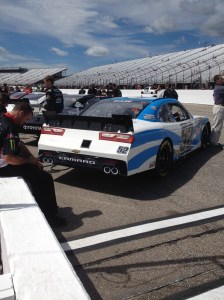
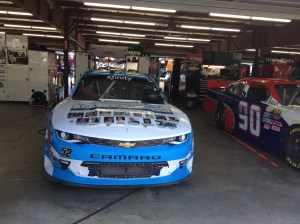
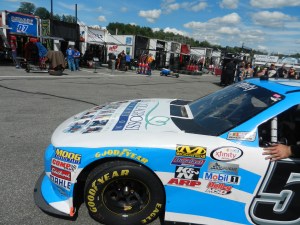
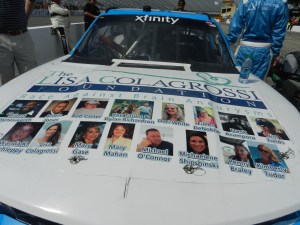
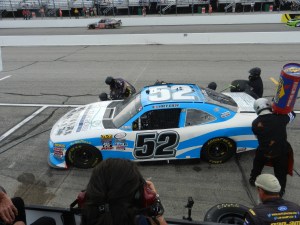
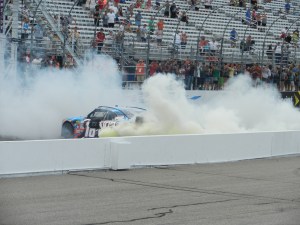
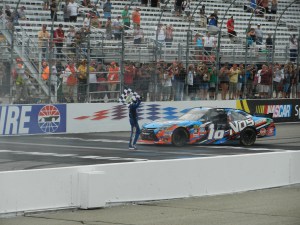
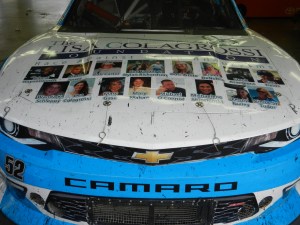
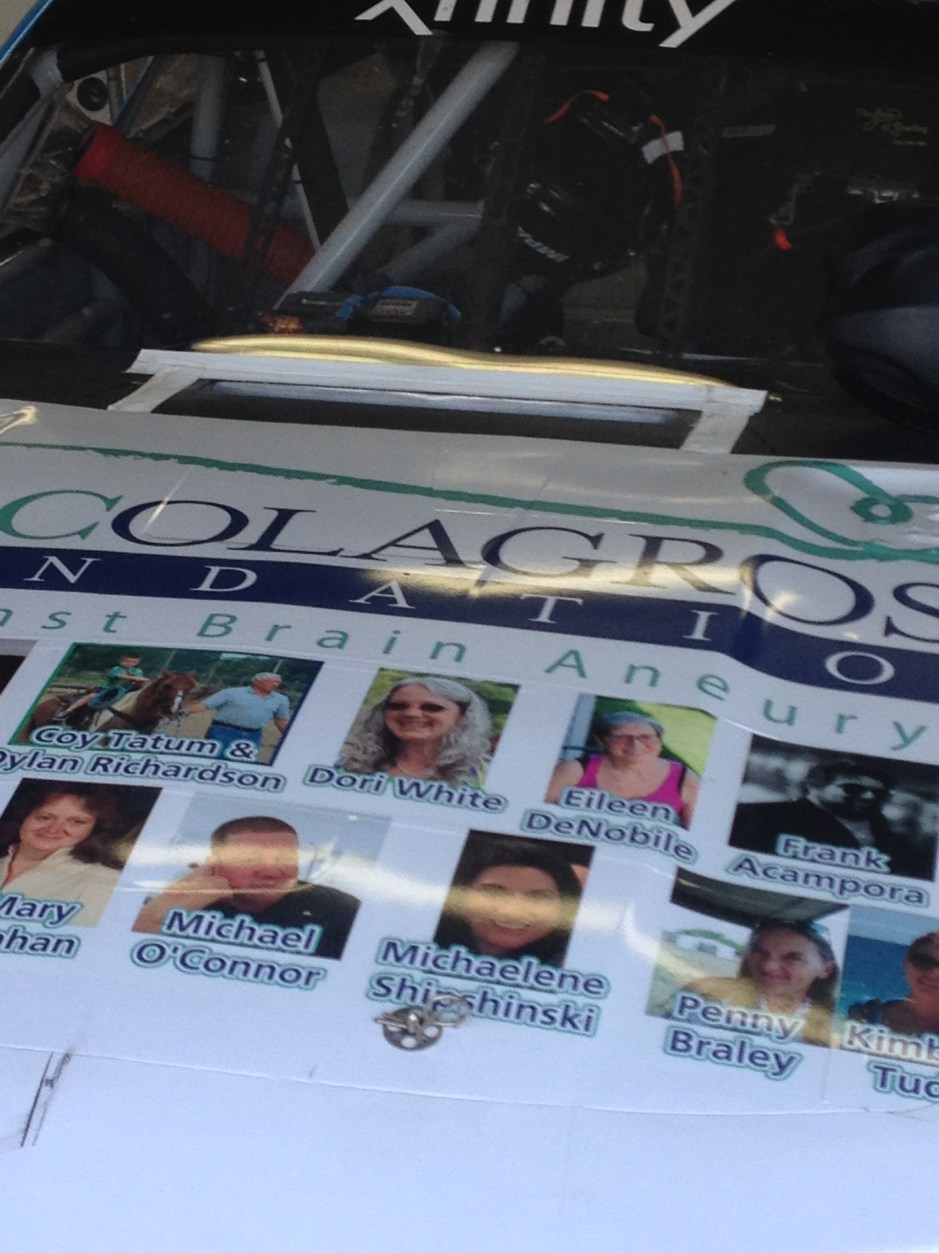
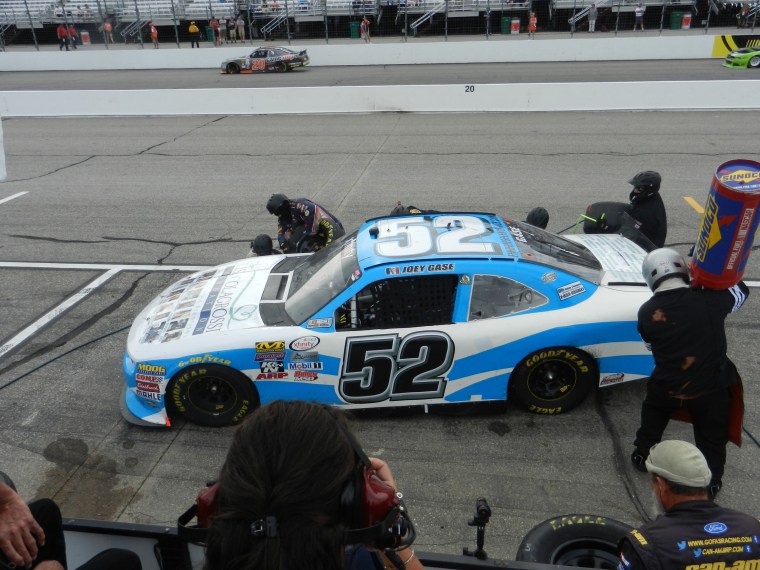
Such is the message behind the hood and rear, deck lid sponsorship on the #52 Chevy Camaro for this weekends NASCAR Xfinity race at New Hampshire Motor Speedway.

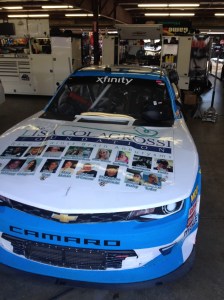
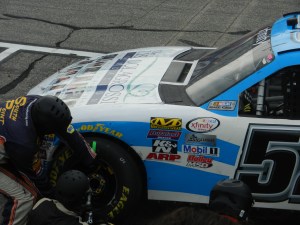
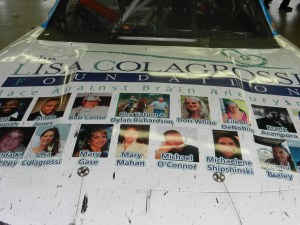
The Lisa Colagrossi Foundation, a worldwide leader in raising awareness for brain aneurysms, sponsored the car driven by Iowa native, Joey Gase. The foundation asked for people effected by brain aneurysms to donate money to have either their name or photo of a loved one on the car during the race. The amount of exposure Joey and the car got on this national event was priceless.

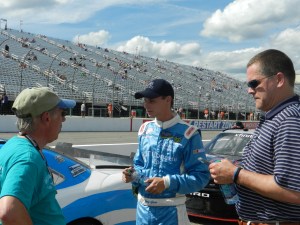
Dave and I were asked as special guests to attend the race. And we cannot say enough about Joey and his father Bob. They were extremely generous with their time and hospitality. We certainly never demanded or asked of anything, but they offered so much from golf cart transport to ear plugs and water. Respect breeds respect.

The car was beautiful (if you can say that about a stock car) and seeing it in person was emotional. Watching Dori and Kim’s photo leave the garage area was almost like setting them free to go fly on the track. 32 individuals effected by brain aneurysms were on the car including notable figures such as Albert Haynesworth (NFL), Maryam Dabo (James Bond girl), Andre Jones (TJ Jones/NFL, Detroit Lions father), and Ashley Harris (wife of Tommie Harris/NFL, Chicago Bears) and a few not-so-notable figures such as myself, my sister Dori and Dave’s niece Kim.

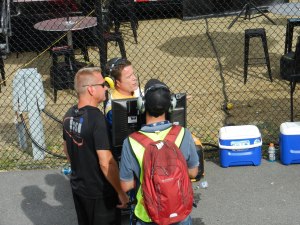
Bob Gase and Todd Crawford were wonderful hosts and showed us around the track. We also had an opportunity to spend time with Joey in his hauler to cool off and get out of the sound and noise. He’s a wonderful young man and shouldn’t have had to lose his mother at such a young age. I had fun talking racing with him – he may not say the same. 🙂 Dave and I are big NASCAR fans and we have been following him in the Xfinity series and the few cup starts he has had.

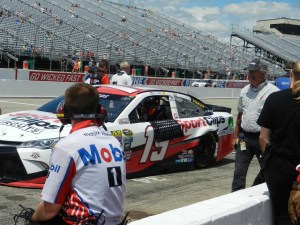
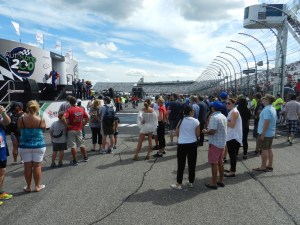
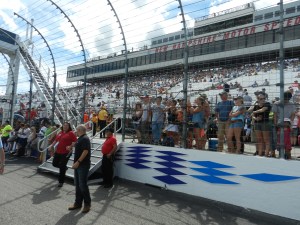
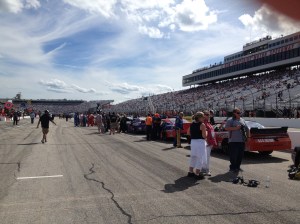
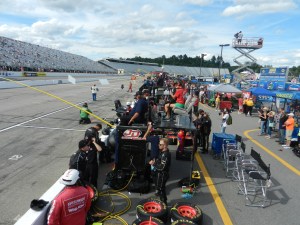
This summer weekend race at New Hampshire is always a busy one in the garage area because they have three different series racing on Saturday and the Sprint Cup teams also had several practices, so there were opportunities to see a lot of on-track action. We enjoyed some of the Whelen Modified race and got to see the end of one of the cup practices. With the pit access we had, we were able to get close to some of the cars and drivers on pit road. Dave snapped a photo of Jack Rousch and saw Richard Childress walking by. We’ve been to three races at NHMS before, but this was a different experience for sure.

The pit and garage areas are regular hives of activities throughout the day and one needs to be aware of your surroundings. Many carts, cars, gas cans, and groups of media moving back and forth between the garages and trackside. I was run into on pit road during the modified race because I had ear plugs in and he couldn’t stop the large cart. He hit me gently and did apologize and we had a laugh.

The weekly circus that is NASCAR is amazing. The logistics and organization that goes into each team and just getting the event produced is impressive. And then add to that the wonderful staff at New Hampshire Motor Speedway who could not have been nicer. A stellar group of people and a lot of fun.

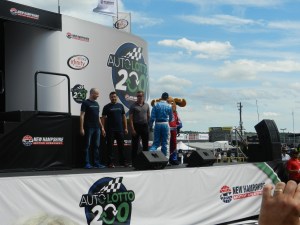
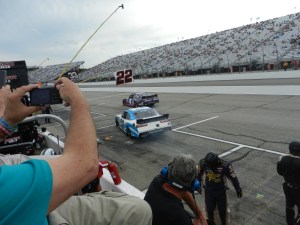
We were able to take many photos with Joey at the car before the Xfinity race as well as stand next to the car during opening ceremonies and the singing of the anthem. Something I’ve only seen on TV previously, or in the stands. This perspective was a lot of fun and It was emotional to be standing next to the car and see our loved ones there with us.

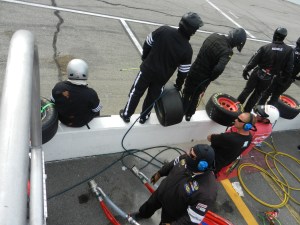
Then after the anthem was sung Joey’s dad led us over to the team’s pit area and informed us we’d be sitting on top of the pit box for the race! Now THAT was very, very unexpected. We weren’t really sure where we’d be to watch the race, but I hadn’t even thought about the actual pit box that is wheeled over from the hauler. It was a tight fit, but Todd, Dave and I climbed the narrow ladder to the three chairs for us. What an amazing view for a race! Dave and I geeked out a wee bit I think.

The sounds and smells of the cars racing by and coming in for pit stops is either something you love or hate. I happened to be one of those people that loves it. My sister Dori and I always used to go the demolition derbies at our local fairgrounds every year until I moved to Maine in 2001. She was also a NASCAR fan back in the day and I truly felt her with my on top of that pit box geeking out with Dave and I and enjoying the event immensely.

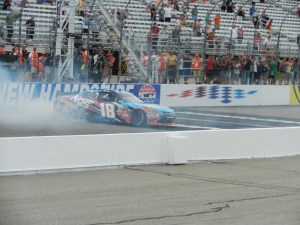
Joey didn’t qualify for the race very well, but he move up during the race and finished a respectable 25th place out of 30 cars. He is a good driver. He doesn’t ruffle any feathers on the track and hasn’t caused any fights on pit road or in the garage area (that I’m aware of!) and I think he has treated other drivers with respect. Again…respect breeds respect. I think the two media pieces produced by NBC Sports about Joey over the weekend were a reflection of the kind of young man he is and how he has taken something that is very painful and is helping others. It was a pleasure to meet Joey and his dad and we will continue to support him and cheer for him on a weekly basis.

It was a special, special day at the track and it was wonderful to get close to the action. As a double brain aneurysm survivor, I took great pride in having my name on the car and hoping the words “brain aneurysm” have now entered into the vocabulary of the NASCAR community in a bigger fashion. There are a few people who have even effected within the NASCAR family and we know they’re going to be helping TLCF help raise awareness and make the public more aware of the symptoms and their own personal stories.

Thank you to Todd Crawford and The Lisa Colagrossi Foundation for making this day possible. We look forward to future endeavors and helping to save lives.

  • View photos below and visit our Facebook page for more photos at: KAT-Walk & Karo5k

This Year’s Angiogram

I’m seriously hoping this is my last angiogram for awhile. I’ve seen that angriography suite far too often the last several years. However, it’s the best way to see what’s really going on with my pesky vascular system.

As stated in my previous blog entry, this angiogram was to determine if there were any changes to my original 11mm brain aneurysm from last year when it was discovered more blood was starting to creep back into the neck of the aneurysm. Obviously, the 20 coils and the one stent weren’t doing the best job they could be, but I’m still here.

Since there was a chance I’d be staying overnight, I had to go to admissions first and check in, then we went straight to the radiology department. They were quite busy today, although I reminded myself I’m usually scheduled for much earlier appointments. This is the first time I’ve had an afternoon appointment and I was VERY hungry and thirsty after not having anything to eat or drink since midnight the night before.

Upon entering radiology, Dave and I were greeted from a distance by nurse John, who we usually see when we arrive there. It’s a mixed blessing when you’ve visited a place so often you become so familiar with the staff of a hospital. John told my attending nurse that I didn’t need any instruction because I knew exactly what I was supposed to do in here. LOL Yes…pretty true.

The IV was hooked up, more questions were asked, and more instruction was given. We were most curious about the balloon occlusion test and what that entailed.

The BOT is a little more risky and it would also require another port and catheter into my other arm where something would be injected to bring my blood pressure down during the test. I wasn’t looking forward to TWO catheters. Dr. Ecker explained the risks and why they’d keep me over night as more of a precaution. If I was doing great after the whole thing I could potentially go home and not have to stay.

I said my good-bye’s to Dave and was wheeled into the radiology angiography suite. As usual, the teams assembled for every single angiogram I’ve had at Maine Medical Center are top notch and always make me feel comfortable and at ease. Even though I’ve gone through many of these, it’s still a nervous time.

They allowed me to request a music station on their Pandora internet radio that was piped into the suite. I chose 80’s Throwback music. As the doctor walked in he said the music was a step up from the morning sessions. I said “You’re welcome”.

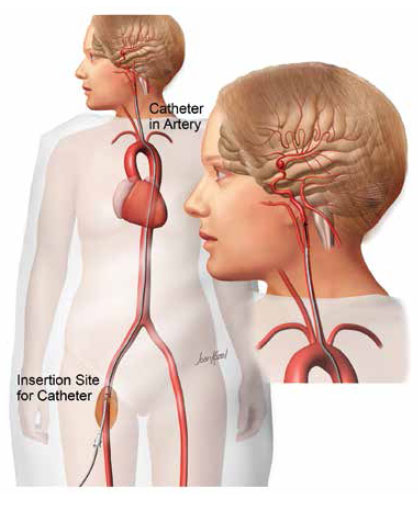
So enough of the pleasantries and on to the drugs, please! I’ve always had some pretty good pain when the catheter in my groin is inserted and I always request a little extra something special. Thankfully, they complied and it wasn’t too bad. They also inserted the IV into my left arm to prepare for a catheter for the balloon occlusion test. That was a little painful as well, but it didn’t last long.

I know many people don’t understand why my groin hurts after having X-rays done on my brain. Aren’t they a tad far away from each other? Well, yes, but inserting a dye into that area gives a direct flight into the brain via one of the main cerebral arteries. I’m not sure why it’s going from the groin and not up higher on the body, such as the neck or chest, but it works, so I’m not going to question it.

image
During the angiogram, they take a series of images of the arteries then inject a dye to see exactly where the blood is flowing and take another series of X-rays. When the dye is injected I see a series of small horizontal lightning strikes behind my left eye. It’s brief, but weird. I keep my eyes closed during the whole thing, mainly because I’m dopey and can’t see anything without my glasses anyway, but because there is usually part of the machine directly above my head and there isn’t anything to see anyway.

After the initial angiogram, Dr. Ecker compared images taken last year at this time with the ones he just took. He was able to pull them up on the screen side-by-side, then even overlap them. He indicated there was absolutely NO change from last year, which was great news. Then he was questioning if we should even go ahead with the balloon occlusion test at that point since nothing had changed.

The main reason we were going to do the balloon occlusion test in the first place was to see if my vascular setup could even handle such a reversal of blood flow should a I NEED to have something dramatic done to prevent more blood from getting into the brain aneurysm.

Since there didn’t appear to be any immediate need for that, based on this angiogram, we both decided to forgo the BOT this time. I was okay with that. I wasn’t looking forward to more pain, or an overnight stay. However, a part of me was disappointed we just didn’t do it and get it over with now so we’ll know down the road.

Because they had expected to do a lot more, the large team assembled for this big event wasn’t really needed now and the last thing remaining in the radiology suite was the dreaded “plug”, or Angio-Seal™. The angio-seal is a small device that basically closes up the puncture site in the groin. However, since he used a larger catheter for today’s procedure, that larger plug was needed. It can be quite painful, mainly because I’ve been “poked so many times” as he said. Lucky me!

Why, yes…it WAS painful and they had to tell me to calm down, relax, and keep my leg down. I did. Still hurt. LOL The UPSIDE of using the closure device is that I only have to lay flat in recovery for two hours, not four or more hours if they were simply to apply preasure to the site for 15 minutes. The angio-seal allows the bleeding to stop much more rapidly and a quicker discharge from the hospital So, that’s the trade off for the pain.

image
The seal is comprised of three absorbable components: a small anchor, collagen, and a suture. The doctor guides the anchor through the hole created during the procedure where it is drawn in against the wall of the artery and the suture and collegian compact to create a secure seal over the entry point in the groin. All three components dissolve and are absorbed into my body in about 90 days. I’ll have an odd bump there for awhile, but the pain should ease after a few days.

The recovery in the radiology department is always long, but it seemed more so this time because they kind of forgot to offer me any food or water. It wasn’t until Dave asked them about an hour into my stay that I got a sandwich and some water. That’s highly unlike that crew and I was a little surprised.

Once they had me up on my feet for a short walking test and determined I wasn’t dizzy or unstable, I was discharged and walked out on my own. The only stop on the way home was at McDonalds for a shamrock shake! ‘Tis the season and it tasted sooooo good.

I developed quite a nasty headache on the ride home and was very glad we didn’t live any further than the 60 miles away we already did. The second I got in the door I had a cold cloth ready, heated my beanbag neck wrap, and crawled into bed for a good 7 hours. All the while keeping a pillow over my groin area so the cats wouldn’t jump directly on it. They did very good….been there, done that and I think they knew mommy wasn’t feeling well and cuddled with me all night.

My sleeping and eating pattern is all out of whack now and my groin is still giving me some pain. I’m pretty tired and not real stable. My head is going back and forth on whether it wants to bother me or not, but nothing I can’t handle. I’ve been in worse pain, been in worse condition, and I’m just lucky to be here.

However, there still is that lingering “issue”. Blood has gotten back into my original brain aneurysm and it’s still sitting there. Dr. Ecker wants me to get an MRA so we have a really good baseline image as it stands right now, then we’re hoping to just have MRA’s next time and not have to go through an angiogram as frequently. I’m all for that. Not that I enjoy MRA’s, but it’s far less invasive than angiograms, just loud and annoying. Then if they notice a change on an MRA, another angiogram will be ordered for a closer look.

I came away from this angiogram with mixed feelings. Yes, it’s great news that things hadn’t changed from last year, BUT there is still blood sitting there in the neck of a brain aneurysm that has already ruptured and we haven’t really resolved what to do with that. It’s almost a deja vu of last year. Something I guess I’ll still worry about until we see otherwise one way or the other. I don’t feel like I’m out of the woods yet from that pesky 11mm brain aneurysm. I should give it a name…any suggestions? (Keep it clean!)


The Good, The Bad, and The Tired

Tonight was my first time back to our brain aneurysm support group meeting since probably last September, possibly August. During catalog season I’m always working late and far too tired to go anywhere during the week. Ironically, fatigue and memory is a common theme at many of our meetings as it was tonight.

As always, it was good to see returning faces and I missed a few who weren’t there. We’re getting a nice “core” of survivors, care-givers, and those who have lost loved ones. The support is always there and we all try to listen to each other’s stories and offer validation for feelings and emotions that only those who have gone through the same thing can appreciate.

Unfortunately, I’ve had the brain aneurysm double-whammy; I myself, have suffered a ruptured brain aneurysm, and I have lost two loved ones to ruptures. I’ve seen both sides of the caregiving aspect, or those left behind, and I’ve also been a part of the survival and recovery part. Each part has struggles and pain.

Tonight, a father shared the story of the night his adult son’s brain aneurysm ruptured. It was a violent rupture and if he had been home alone, he would not have survived. His wife was able to revive him briefly – twice. He survived surgeries and a little bit of rehab and multiple rounds of different medications. He was at our meeting tonight while his father described the night it all happened to us. Even though his short-term memory has basically been lost, he cannot work or drive, and his family continues to endure a level of frustration and pain I cannot even begin to understand for several years now. But he IS alive, walking, talking, and able to function in some capacity.

Hearing a caregiver, and a father, talk about what happened that night, was difficult for me. My sister and Dave’s niece went through very similar experiences….or we can assume. My mind immediately raced to Dori’s rupture and how she lost consciousness on Mother’s Day and her husband was able to revive her while their 15-year old son called 911. But by that point it was too late. The damage from the rupture had already been done.

Then I thought about Kim, who was home alone when her rupture occurred. I can only hope and pray it was quick, but I also always wonder if someone had been there and found her sooner, if she’d be here today and if she were, what kind of life would she be living. The severity of her rupture and the location of it, leads me to believe Kim would not be the same person if she had survived. The same can be said for Dori.

We witnessed tonight the amazement in seeing a survivor of such a devastating rupture, but also the heart-wrenching pain in knowing their loved one will never be the same. That they can no long take care of themselves or their children. That they need major supervision. That they need to be reminded of things on an hourly basis to get through the day…yes, they DID survive, but in a sad way, they’re only a shell of the person they once were.

Is it only by the grace of God, that I am here today? Why did I survive and they did not? Why did I survive with very few deficits when others have continued issues and pain, even years after their ruptures?

I don’t like it when I come away from one of our meetings with these kind of questions. I should just be grateful and keep my mouth shut and never complain about anything, ever again. I AM one of the lucky ones…or one of the chosen ones…or just a person who was in the right place at the right time, with the right set of doctors. Fate? I don’t know.

I suppose those are all questions that will have to remain unanswered. Kind of like “Why doesn’t Fred Flinstone have horribly bloody feet when he has to stop his rock car with his heels?” Why? Why?