Seize The Day?

The Latin saying Carpe diem means seize the day or live each day to the fullest.

Do I Carpe diem? If I’m honest, no I don’t. Being a double brain aneurysm survivor, I SHOULD seize each day, but I don’t. Am I grateful? Of course, I am.  Do I wake up each morning and think “I am so grateful and blessed to be here”? No, I do not. I should…but I don’t. And those people who say they DO wake up each morning and actually think about how blessed they are, the skeptic in me thinks, “Really?”

MY first thoughts every morning are that I’m very tired, or my back or head aches, or that I slept far too long on my left side, which is a bad thing because of where my craniotomy is. No, my first thought usually isn’t how grateful I am.

I wish I could live each day to it’s fullest and feel grateful every day. Although I am one of the fortunate ones who still can, I need to work to pay the bills and secure good health insurance. I think more about those things. And I do more work than Carping that diem.

What I DO think about every day is brain aneurysms. How can I not? I think about my own aneurysms and the issues I still face. I think about the paths people’s lives, not just mine, have been forced to take as a result of brain aneurysms.

The parents who has lost a child. The husband who has lost a wife. The child who has lost a mother.  All of those people I have met and they are a part of my life now due to our shared experiences of losing a loved one to a brain aneurysm.

Brain aneurysm survivors are also a part of my life. We share a bond. We share our fears. We share our frustrations and scars with one another.

I’m not crazy about the month of October, so I’m always happy when I make it through the month. It’s VERY stressful at work in October and my family history has many sad occasions and memories that have happened in October. I suppose I should be grateful the month goes by in a snap…suddenly it’s November. It’s cold. All of the colorful leaves have fallen off the trees. One of these years, I WILL get to the mountains of Maine, stay in a hill-top cabin and view the fall foliage. Something I have yet to do since moving here in 2000.

September is the month when I FEEL the most grateful for being alive and being able to share my brain aneurysm story and help anyone I can. It’s the month chosen for our annual walk and run to honor the lives of two beautiful young women taken far too soon by ruptured brain aneurysms.

Then that pesky cynic within me thinks…I’m pretty sure no one I know would have organized a walk or run in MY honor. That’s how loved and adored these two young women were and how many friends they had. I couldn’t even get one person to visit me at home during both of my recovery periods….which were 6 and 3 months respectively. Yeah…I’m pretty sure I would have still remained just part of the statistics had I not survived. Which makes MY survival even more difficult to take. Why did these two young, vibrant, popular women have to die and I’m still here? I guess it’s to share my story and theirs. Lucky me? I’m grateful? Yeah…sometime’s it’s very difficult to feel that.

BEING grateful every day is a given in my case. If I wake up…yeah, that’s good! FEELING grateful is a whole other animal and it hits me at moments, rather than an every day thought.

I remember feeling grateful at the end of October when my devoted husband and I pulled into the driveway after two weeks in the hospital after my rupture in 2006. Although I wouldn’t return to work for another six months, it was a relief to be home. I was grateful to see the inside of the house I had come to love and to pet my kitty cats again.

I was overcome with emotion that following spring when I walked out to my garden for the first time and it hit me that things were starting to come alive again, as they do every year and that I was grateful, lucky, and blessed to be able to see my garden again. To smell the wet soil. Feel the wind on my face. Yes….I WAS grateful and very emotional as a result. It could have all ended in early October for me.

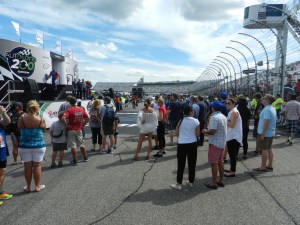
I feel grateful every September during our annual photograph of brain aneurysm survivors at the KAT-Walk & Karo-5k. I am grateful to be alive and to share this photo with other survivors from all over the state of Maine, New England and the country. I FEEL those moments tremendously.

It’s far too easy to assume someone who survived a life-threatening illness or medical emergency is grateful and lives each day to the fullest. Many don’t have the luxury to do so. Many have such horrible deficits that just living each hour is a struggle. Do they have time or the capacity to even THINK about being grateful? I doubt it.

Without even knowing it, I do believe I am grateful on a daily basis. I can rattle off a list of the things I am grateful for. It’s that seizing the day thing I still have to work on. I’m very tired.
 

Brains R’ Us

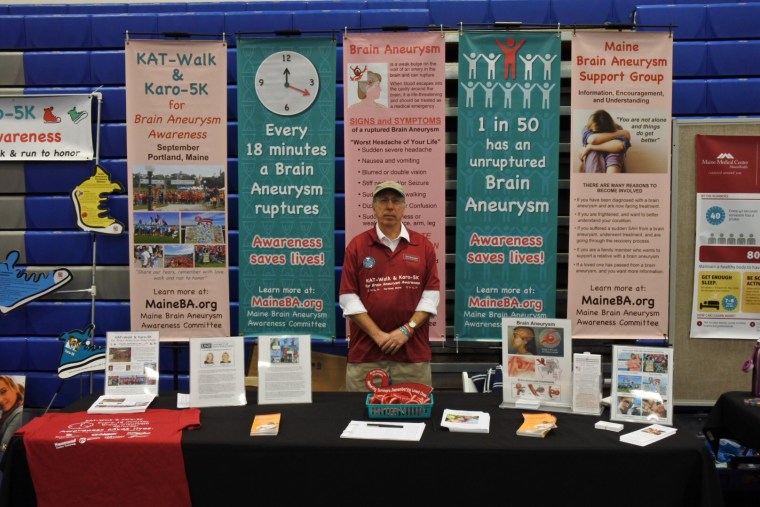
Last Friday evening Dave and I represented the Maine Brain Aneurysm Awareness Committee at the Brain Fair presented by UNE Center for Excellence in the Neurosciences.

This fourth annual event, held at the Harold Alfond Forum at the University of New England in Biddeford, Maine was a wonderful, interactive event for all ages.

Attendees were able to enjoy fun and engaging hands-on activities, presentations, and exhibits. They also found neuroanatomy displays, sheep brain dissections and microscope set-ups where they could observe a variety of microscopic brain pictures. There were also games for the kids and a “Protect The Egg” egg drop creating a fun and educational event for kids and adults alike.

Michael Birman, Ph.D., associate professor of neuroscience and faculty coordinator for the UNE Center for Excellence in the Neurosciences K-12 Outreach Program said it best when he explained, “We want to share with the public how amazing the brain is and how important it is to keep it safe. It’s so critical for every aspect of our life and yet also so fragile.”

Keeping the brain safe was also the highlighted message for the Michael T. Goulet Foundation and their bicycle helmet-fitting and brain injury prevention program. Michael Goulet died at the young age of 21 after suffering a brain injury at 13 and later seizures. His family has devoted their lives to increasing awareness, prevention and improved treatment for seizure disorders and brain injuries. It was wonderful to see so many children picking up new bike helmets and we are proud of our friendship with the Goulet Foundation.

IMG_2720

Many people stopped at our table and wanted to learn about brain aneurysms and several people had relatives who had suffered aneurysms. We were a little unprepared for the children who were there and their questions. While trying not to scare them, we wanted to give them honest answers and still give them something to learn and take away with them. Next time, we’ll come with something a little more fun for the kids.

Dave is much better at starting conversations at these types of events than I am. And I am NOT at my best late Friday afternoon and early evening after a full work week. My conversations had a lot of stops and starts and a lot of fighting to find the right words. Hopefully I made some sense to those in attendance.

As the crowd thinned out, Dave and I were able to wander around together and see the real stars of the show — BRAINS! And I mean REAL brains. They had about 10 human brains to view. Many were healthy brains, but about half of them had some kind of disease or malformation. One even had the full spinal chord attached. It was creepy, but cool.

We were truly fascinated to see the size of a real brain and see the inside of one. Also viewing the Circle of Willis, where the majority of brain aneurysms occur was riveting. My rupture was from that area. Once we told the doctor that was where my annie was, he pointed out that specific area.

One of the brains was from a person who had had a stroke. The damage done to the brain was visibly disturbing but fascinating and a scary indication of what can happen. A large area on the top of the brain was a dark gray color and had collapsed compared to the other side. We were told that person would have suffered disabilities on the other side of the body.

Another brain had a large segment of the dura around it, which is the protective covering of the brain. When a brain aneurysm ruptures, it’s the blood that gets caught between the brain and the dura where damage can occur. The dura is also cut and pulled back to reveal the arteries and brain during a craniotomy, which is what happened to me on my 2nd brain aneurysm. I was intrigued by this brain and the dura. Truly amazing how thin this covering was.

The brains represented here could be held comfortably in both hands. I’m not sure what I was expecting with regards to the size, but I thought it might be bigger. It was the size of the main arteries that really surprised me. The were much larger than I thought. And to think my first brain aneurysm, at almost 1/2″ in diameter, was sticking out of one of those…again…fascinating and scary.

The brain controls EVERYTHING we do. When it’s assaulted by blood and suffers injury, the time needed to recover and rebuild takes longer. It has to…it’s the motherboard for all of our circuits.

Racing Against Brain Aneurysms

DSCN5454

The title says it all: the sooner we get the best, up-to-date accurate facts out to people, the more lives we can save!

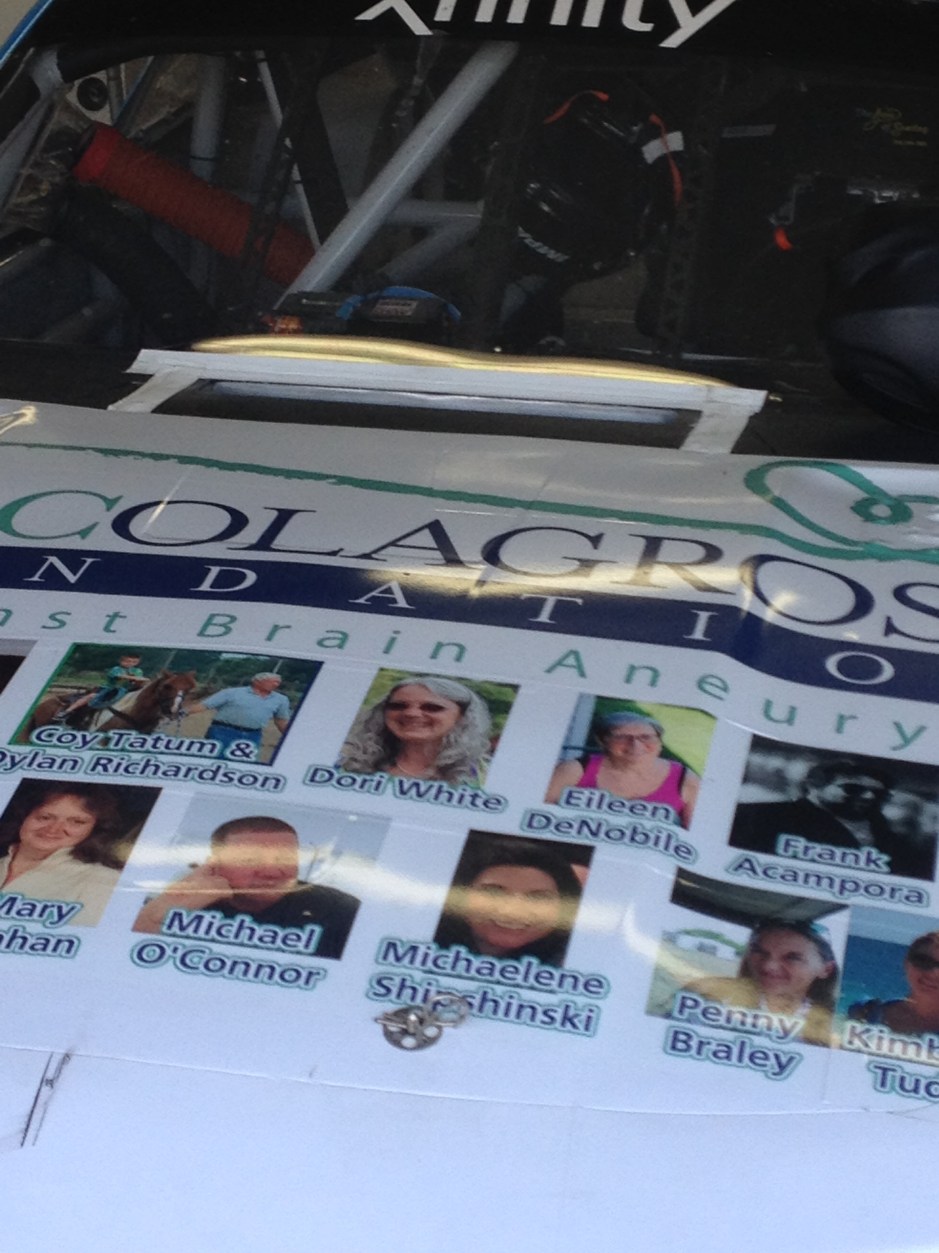
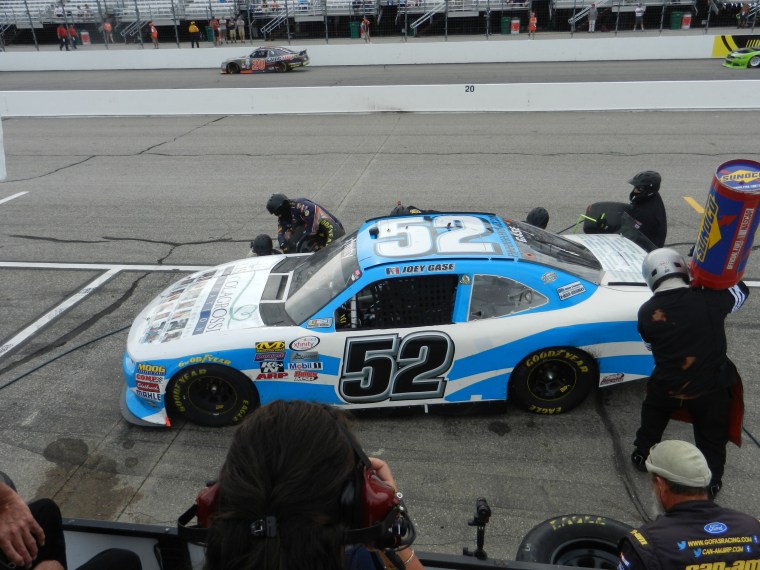
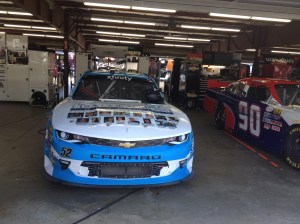
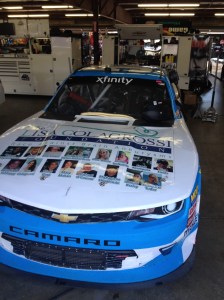
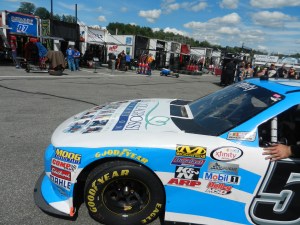
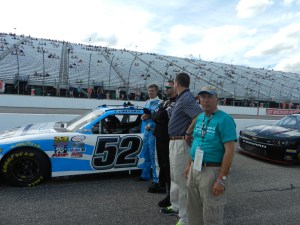
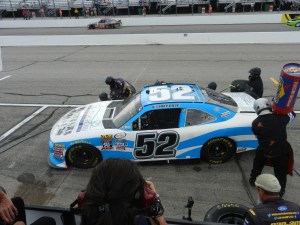
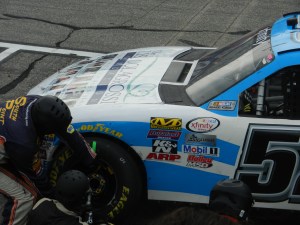
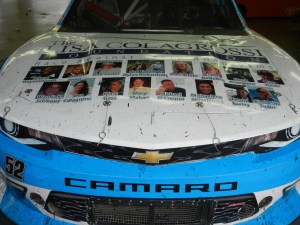
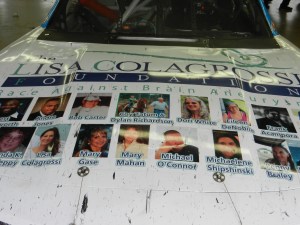
Such is the message behind the hood and rear, deck lid sponsorship on the #52 Chevy Camaro for this weekends NASCAR Xfinity race at New Hampshire Motor Speedway.

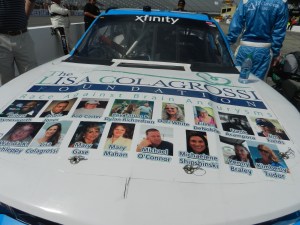
The Lisa Colagrossi Foundation, a worldwide leader in raising awareness for brain aneurysms, sponsored the car driven by Iowa native, Joey Gase. The foundation asked for people effected by brain aneurysms to donate money to have either their name or photo of a loved one on the car during the race. The amount of exposure Joey and the car got on this national event was priceless.

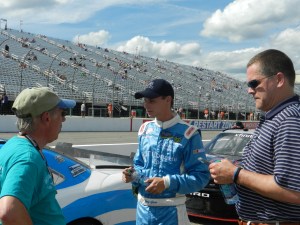
Dave and I were asked as special guests to attend the race. And we cannot say enough about Joey and his father Bob. They were extremely generous with their time and hospitality. We certainly never demanded or asked of anything, but they offered so much from golf cart transport to ear plugs and water. Respect breeds respect.

The car was beautiful (if you can say that about a stock car) and seeing it in person was emotional. Watching Dori and Kim’s photo leave the garage area was almost like setting them free to go fly on the track. 32 individuals effected by brain aneurysms were on the car including notable figures such as Albert Haynesworth (NFL), Maryam Dabo (James Bond girl), Andre Jones (TJ Jones/NFL, Detroit Lions father), and Ashley Harris (wife of Tommie Harris/NFL, Chicago Bears) and a few not-so-notable figures such as myself, my sister Dori and Dave’s niece Kim.

Bob Gase and Todd Crawford were wonderful hosts and showed us around the track. We also had an opportunity to spend time with Joey in his hauler to cool off and get out of the sound and noise. He’s a wonderful young man and shouldn’t have had to lose his mother at such a young age. I had fun talking racing with him – he may not say the same. 🙂 Dave and I are big NASCAR fans and we have been following him in the Xfinity series and the few cup starts he has had.

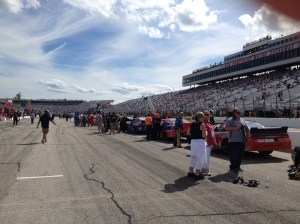
This summer weekend race at New Hampshire is always a busy one in the garage area because they have three different series racing on Saturday and the Sprint Cup teams also had several practices, so there were opportunities to see a lot of on-track action. We enjoyed some of the Whelen Modified race and got to see the end of one of the cup practices. With the pit access we had, we were able to get close to some of the cars and drivers on pit road. Dave snapped a photo of Jack Rousch and saw Richard Childress walking by. We’ve been to three races at NHMS before, but this was a different experience for sure.
The pit and garage areas are regular hives of activities throughout the day and one needs to be aware of your surroundings. Many carts, cars, gas cans, and groups of media moving back and forth between the garages and trackside. I was run into on pit road during the modified race because I had ear plugs in and he couldn’t stop the large cart. He hit me gently and did apologize and we had a laugh.

The weekly circus that is NASCAR is amazing. The logistics and organization that goes into each team and just getting the event produced is impressive. And then add to that the wonderful staff at New Hampshire Motor Speedway who could not have been nicer. A stellar group of people and a lot of fun.

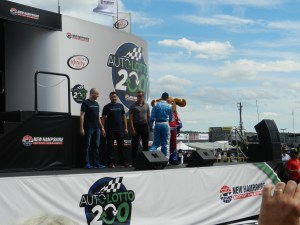
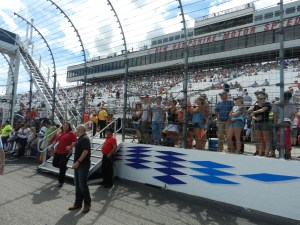
We were able to take many photos with Joey at the car before the Xfinity race as well as stand next to the car during opening ceremonies and the singing of the anthem. Something I’ve only seen on TV previously, or in the stands. This perspective was a lot of fun and It was emotional to be standing next to the car and see our loved ones there with us.

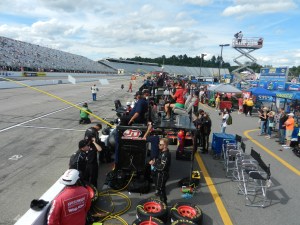
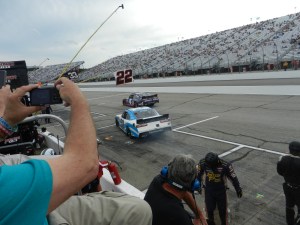
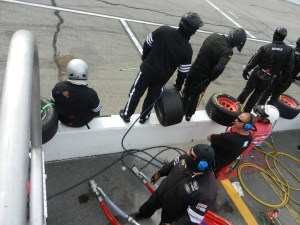
Then after the anthem was sung Joey’s dad led us over to the team’s pit area and informed us we’d be sitting on top of the pit box for the race! Now THAT was very, very unexpected. We weren’t really sure where we’d be to watch the race, but I hadn’t even thought about the actual pit box that is wheeled over from the hauler. It was a tight fit, but Todd, Dave and I climbed the narrow ladder to the three chairs for us. What an amazing view for a race! Dave and I geeked out a wee bit I think.

The sounds and smells of the cars racing by and coming in for pit stops is either something you love or hate. I happened to be one of those people that loves it. My sister Dori and I always used to go the demolition derbies at our local fairgrounds every year until I moved to Maine in 2001. She was also a NASCAR fan back in the day and I truly felt her with my on top of that pit box geeking out with Dave and I and enjoying the event immensely.

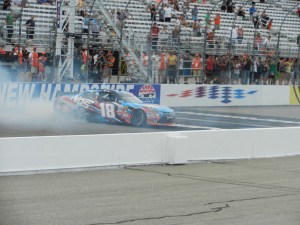
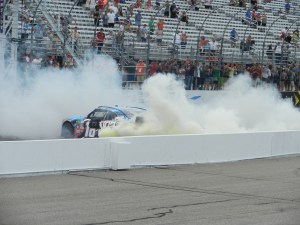
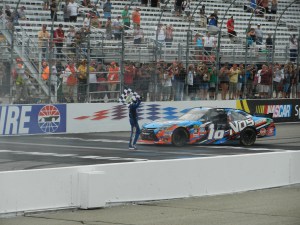
Joey didn’t qualify for the race very well, but he move up during the race and finished a respectable 25th place out of 30 cars. He is a good driver. He doesn’t ruffle any feathers on the track and hasn’t caused any fights on pit road or in the garage area (that I’m aware of!) and I think he has treated other drivers with respect. Again…respect breeds respect. I think the two media pieces produced by NBC Sports about Joey over the weekend were a reflection of the kind of young man he is and how he has taken something that is very painful and is helping others. It was a pleasure to meet Joey and his dad and we will continue to support him and cheer for him on a weekly basis.

It was a special, special day at the track and it was wonderful to get close to the action. As a double brain aneurysm survivor, I took great pride in having my name on the car and hoping the words “brain aneurysm” have now entered into the vocabulary of the NASCAR community in a bigger fashion. There are a few people who have even effected within the NASCAR family and we know they’re going to be helping TLCF help raise awareness and make the public more aware of the symptoms and their own personal stories.

Thank you to Todd Crawford and The Lisa Colagrossi Foundation for making this day possible. We look forward to future endeavors and helping to save lives.

  • View photos below and visit our Facebook page for more photos at: KAT-Walk & Karo5k

Show and Tell

A few weeks ago Dave and I attended the 35th Annual Atlantic Partners EMS Seminar at the Samoset Resort in Rockport, Maine. This annual event provides education to the most dedicated emergency medical service personnel, hospital staff and firefighters from Maine and New England. There were pre-conference courses, over 100 continuing education classes, and co-sponsored one day conferences from the Maine Ambulance Association, Maine Committee on Trauma, and Maine Cardiovascular Health Council.

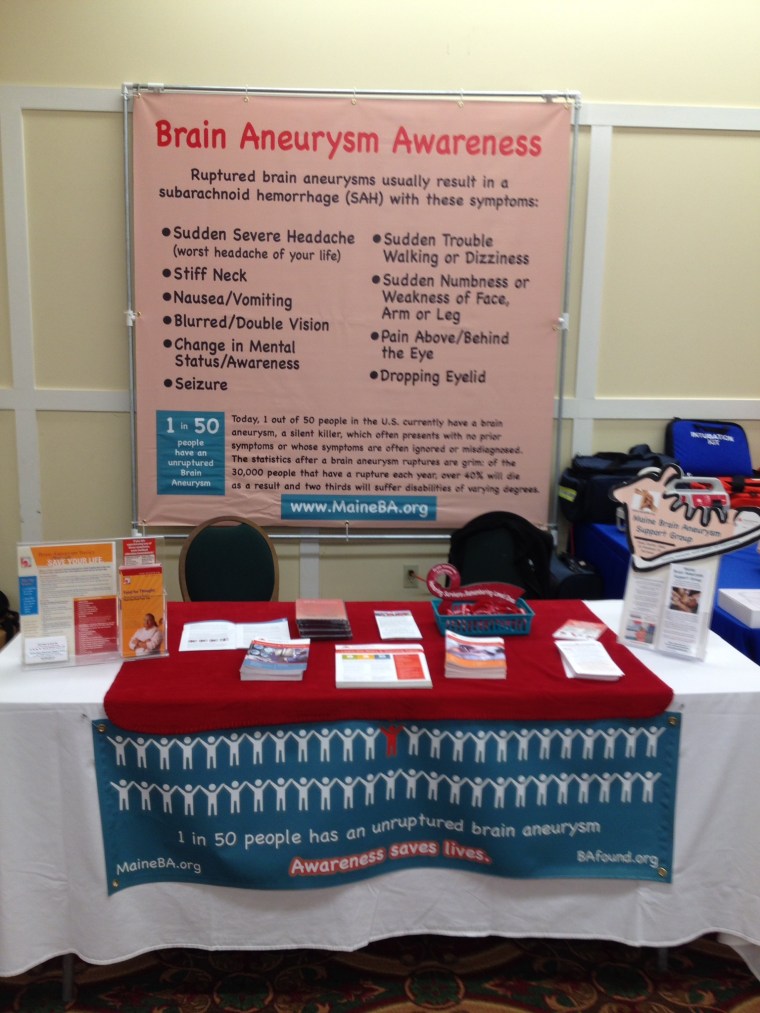
We attended the Friday and Saturday sessions participating in the vendor area where we set up a Maine Brain Aneurysm Awareness table/booth. Not only is it a good way to help raise awareness for brain aneurysms, it’s also a wonderful way to connect with local EMS personenel and medical staff to alert them to the possible symptoms and signs that someone may be experiencing a ruptured brain aneurysm. Because of the nature of my own personal story on the morning of my rupture and my sister’s misdiagnosis and subsequent death from a rupture, Dave and I are particularly sensitive to educating EMS crews.

The morning of my rupture in 2006 presented me some classic stroke symptoms. Upon repeating our story throughout the two days, we saw many eyes being rolled, jaws dropped, and stunned expressions when we told them the ambulance crew did not take me to the ER. They basically left it up to us to go to the ER. I’d like to say I believe some of the protocols have changed since then, but at our monthly brain aneurysm support group meetings, we continue to meet some people who have had some of the same issues, or have been misdiagnosed. So, there is still work to do.

In hindsight, it is so very easy to say that I SHOULD have gone to the hospital. And those shocked expressions from the EMS members we met and THEIR insistance that they would have transported me, certainly made us feel good, but the crew that came to our house couldn’t have realized the seriousness at the time…unless they asked some very pointed questions. I need to cut them some slack; they’re only human despite the fact I could have died later that day, or the next day…..

image
The MaineBA Booth

Dave and I met some terrific people who devote so much of their time to helping others and making sure the health and well-being of the general public is a top priority. Some important connections were also made with individuals who can truly make a difference in the state’s regulations and protocols. There were several invitations from local groups for us to come and speak to them about our story and make them aware of what CAN be a serious issue if it’s not addressed in a timely manner.

One of the classes on Saturday afternoon was held by Dr. Evie Marcolini. Her main focus that day was to discuss difficult neuro cases and brain aneurysms were one of the topics. She stopped at our table a few hours prior to her class and spoke to us. Once Dave and I knew she would be addressing brain aneurysms and expressed a deep interest in our story, we felt it necessary to go the class. We both did a good job of making sure we kept to ourselves. This wasn’t a class for us, but for those people who are on the front lines of very difficult situations and we needed to maintain restraint in putting in our two cents.

Dr. Marcolini’s class was really wonderful as she provided several case studies of patients that would have altered mental states and questioned the class on what they would ask, how they would react, and what they would tell emergency room personel. It truly is that communication between the 911 responders and the patient that can set the ball rolling for precise care and attention later on.

What I took away from the two days was how dedicated those folks are and many are volunteers. I was surprised and pleased with the number of people who thanked US for being there and raising awareness. The number of people who knew someone or had a family member with a brain aneurysm was certainly eye opening. It’s a far more prevalent issue thoughout the country and our state. We even think we were able to convince one woman to get a scan. She had a family history and she could be highly succeptable to developing one and it’s far better to know you have it and treat it, then to have it rupture and potentially die as a result. THAT was one of our big messages: make sure EMT personal and 911 operators know of any family history of brain aneursyms and to let them know if a headache is the “worst of your life” and very different than any you have had previously. That’s assuming you are able to speak.

On our drive home, I realized I was tired of hearing my own story. Dave and I both retold it many, many times over the two days and I compared it to show and tell: I was the “show” (look at me, I survived and here are a few scars to prove it) and Dave was the “tell” (here’s what happened). There are those times when I just need to step away from brain aneurysms and take a break. It’s difficult to do since I live with them on a daily basis, but I was glad I had Sunday to detox and reset. It wore me out.

I hope we made an impression on people and that their next emergency call for someone with a horrible headache will result in them asking if they’ve experienced anything like that before or if there is a family history of brain aneurysms. Those two simple questions could save a life and get someone to the ER in time to prevent devastating brain damage.

Thank YOU to everyone who goes out there to help save lives!

On a fun side note:

The celebrity guest at the conference on Saturday was Randolph Mantooth from the 1970’s show EMERGENCY. He played the lovable Johnny Gage and I grew up with that show, so I got a little girl-silly when I saw him. He’s a huge supporter for the emergency medical community and the money raised from his autograph session was going directly to local funds here in Maine.

I actually got in line twice. First time to get the autograph and a 2nd time because my camera wasn’t working on the first turn through. LOL He was very sweet and still looked darn good for 70 years old and fighting cancer.

A local EMT also bought and redid an old Dodge truck and turned it into an almost exact replica of the Squad 51 truck. I flipped when I saw it Friday night before we left the vendor area. I did a double take and saw it and realize it was THE truck. On Saturday morning, I wanted to take a photo of it and right after I took a photo, the gentleman who worked on the truck, came immediately up to me and held his hand out like he was going to take my camera away from me because I took a photo! Instead, he took my camera, but also grabbed one of the fireman’s hats off the truck and took MY picture with the truck. Pretty neat.