Abusing the Gift

I’m always seeing survivors, not just brain aneurysm survivors, say they’re grateful for every day they’ve been given, or they wake up each day and feel that gratitude, and live their lives differently as a result of surviving. I have mentioned this before, but I guess I’m not one of those.
That’s not to say I am NOT grateful, blessed, lucky, and fortunate to be alive when others aren’t so lucky, but I feel I have not honored that gift that I’ve been given properly. In fact, I can honestly say I have abused that gift.

Have I taken better care of myself since my last report with the neurosurgeon? Nope. I still eat crap, still don’t exercise enough, and still drink wine – somedays a LOT of it. Instead of waking up and telling myself I’m going to run a 5k, I chose not to do much of anything to promote my survival. Which is a HUGE disservice to so many people who have helped me get to this point in my life: my family, my husband, my friends, and more importantly the doctors who have saved my life on a few occasions since 2006.

Many survivors make major changes in their lives: eat better, exercise more, get new less-stressful jobs, dedicate their lives to helping others…or run a 5k or marathon. I admire them, but that is not something I have done. Yes, I am part of our local brain aneurysm group and I help when I can and where I can, but I could certainly be doing more. And should be doing more.

I recently retired and now that I don’t have the daily stresses of the job, I’m feeling more retrospective than usual. I am also feeling guilty for not honoring the gift I’ve been given. SAYING I’m going to do better and DOING it are two very different things. Yes, it’s easier to eat better on a sunny day when your mood is lifted, but on those dark and stormy days in January, one feels more inclined to seek comfort in food, drink, and laying around. Yep…that’s my M.O.

For those who DO run 5ks and marathons, good for you. You keep doing you. I will never run a 5k, nor do I ever want to. I only run if someone is chasing me. But why does running a 5k seem to be the most important thing for survivors to do? And why do 5ks seem to represent the one way survivors honor their survival? Doesn’t every survivor, who just wakes up the next day and LIVE, a 5k-type of event? Nope…they don’t get that kind of recognition. For those who have trouble moving during the day and have additional physical ailments, just getting out of bed in the morning is a huge accomplishment and should be celebrated just like getting interviewed for the local TV for finishing a 5k and for getting an article in a magazine because you ran a 5k…and of course it also helps if you’re an attractive blond and is thin and already fit not a chubby 60-year old, right?

This past week I learned that a fellow brain aneurysm survivor, Helen, passed away at the age of 71. I’m so very sad about this. She was a loving, kind, and strong woman who had endured many struggles like the loss of a young child well before she had to survive a brain aneurysm. THAT deserves praise. THAT deserves notice. She and her husband, who is blind, have had a rough time, but have maintained positivity and warmth whenever we’ve met with them. Helen had many physical limitations later in her life that effected every aspect of their lives. I will always remember her fantastic smiles, warm hugs, and terrific cooking.

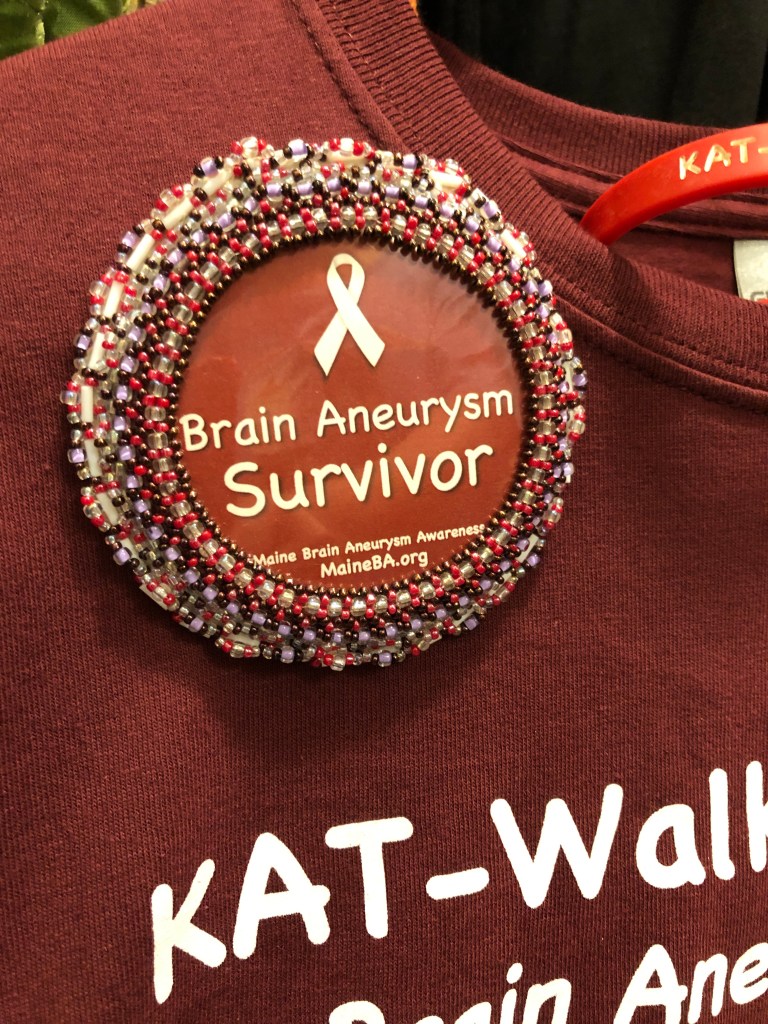
Helen wanted to give back to the brain aneurysm community and she asked Dave and I if she could add beading to our brain aneurysm survivor pins. We had no idea just how beautiful these would be, nor the amount of work she’d put into them. The Native American beading was a talent of Helen’s and it gave her a “job” to do and eased her back into creating this beautiful artwork. I proudly keep her pin on my purse and it always produces positive comments and I always give Helen credit. I will treasure this small gift even more now.
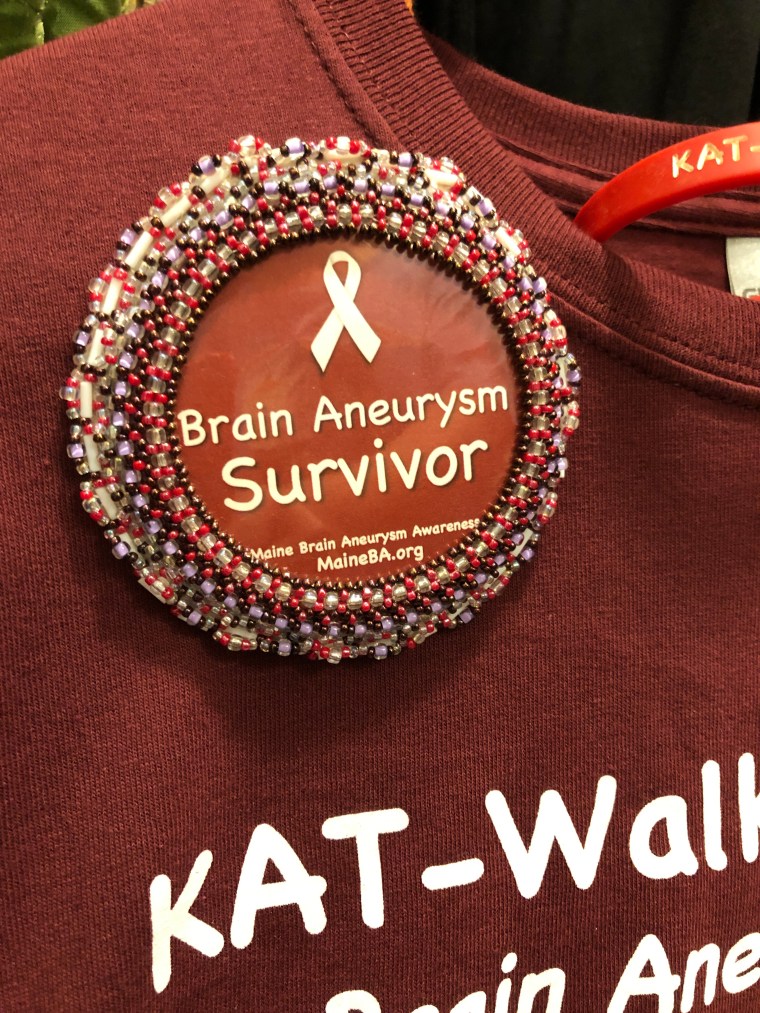
The beautifully-beaded survivor pin that Helen gave me.

Knowing Helen was a gift. My being on this planet is a gift. I need to stop abusing these gifts and step up to honor them. I AM fortunate and blessed. I just need to act like it…just not with a 5k in case I haven’t mentioned that before. 🙂

The Big Picture

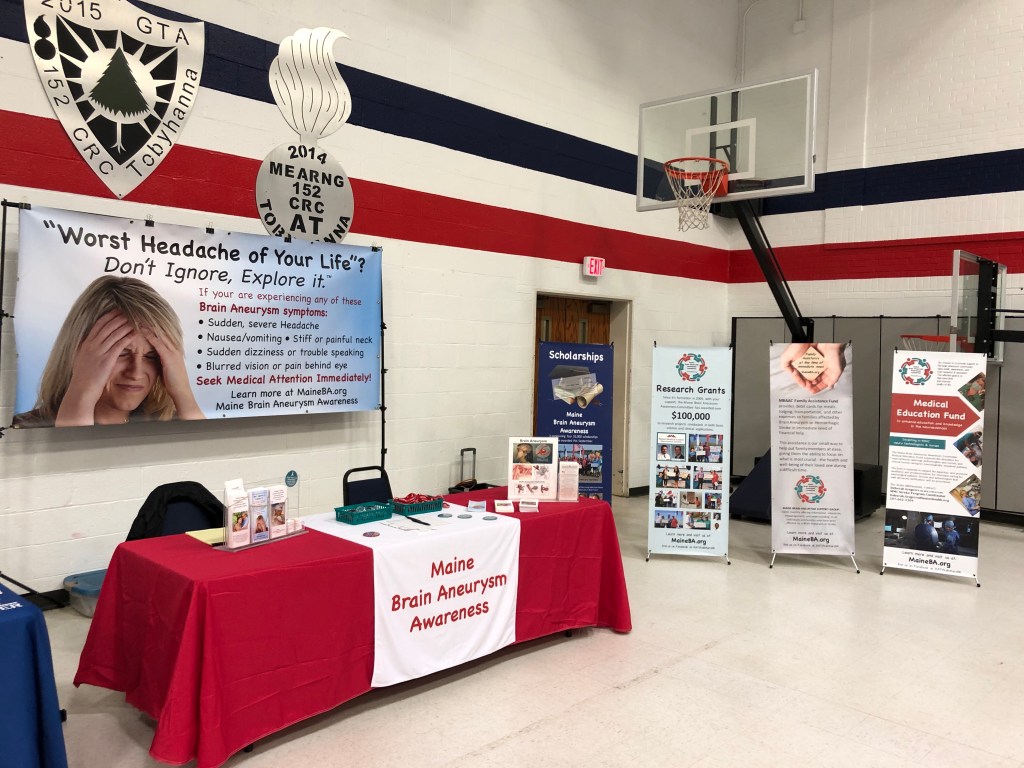
Yesterday, Dave and I spent the afternoon at the Brain Injury Resource Fair in Augusta, Maine. This annual event, sponsored by the Brain Injury Association of America – Maine chapter, was the first held since the pandemic. Our brain aneurysm group had a table along with many, many vendors from different areas of Maine and New England.

The program director of the Maine chapter of the BIAA is headed by Sarah Gaffney who is a spark plug of encouragement and energy. As usual, she and her team did an amazing job with this event. Sarah’s advocacy is motivating and impressive. I was honored when she asked me to tell my story in their November 2020 newsletter.

Dave and I had to shake off some of the cobwebs while setting up our many banners and table-top displays as it has been so long since we have attended any indoor events like this. It felt good!

We might be a small group, but our presence was mighty! 🙂

It was wonderful to see so many familiar faces in person and reconnect with some of the many, many people whose daily focus is to assist the brain injury community here in Maine.

These events are always a challenge for me, mainly because I’m better with faces, but horrible with names. Dave, on the other hand, has a great memory and all of his faculties when it comes to matching names to faces. I didn’t see much of him during the 3-hour event because he was busy catching up and networking with other vendors around the large arena at the armory. This is one of THE best events in the state for doing that.

We got reacquainted with our table displays again.

As the general public started to arrive, you’re quickly reminded why we were all there: to offer much needed education, outreach, information, and resources to those who desperately need it.

I do relatively well when people ask questions regarding brain aneurysms, but when a question is thrown my way that I wasn’t expecting and haven’t had to answer before, I can often struggle. I feel bad I may not give the answer the person was looking for, but I try my best. Dave is much better at that than I am. When I get tired, I can also start to fumble with my words. But I think I’m among friends here who are more forgiving.

Every type of brain injury is represented at this event and every type of service can be found, but knowing where to look is one of the biggest problems, especially in such a rural state like Maine.

Since the pandemic, our brain aneurysm support group has only been held virtually, via ZOOM. So it was wonderful to meet two newer members of our support group in person today for the first time as well as meeting one of our previous speakers in person. I’m very proud of our small group. I KNOW we’re doing good work and today only validated that. If we can help one person feel better, find resources, or navigate a challenge, it’s all worth it.

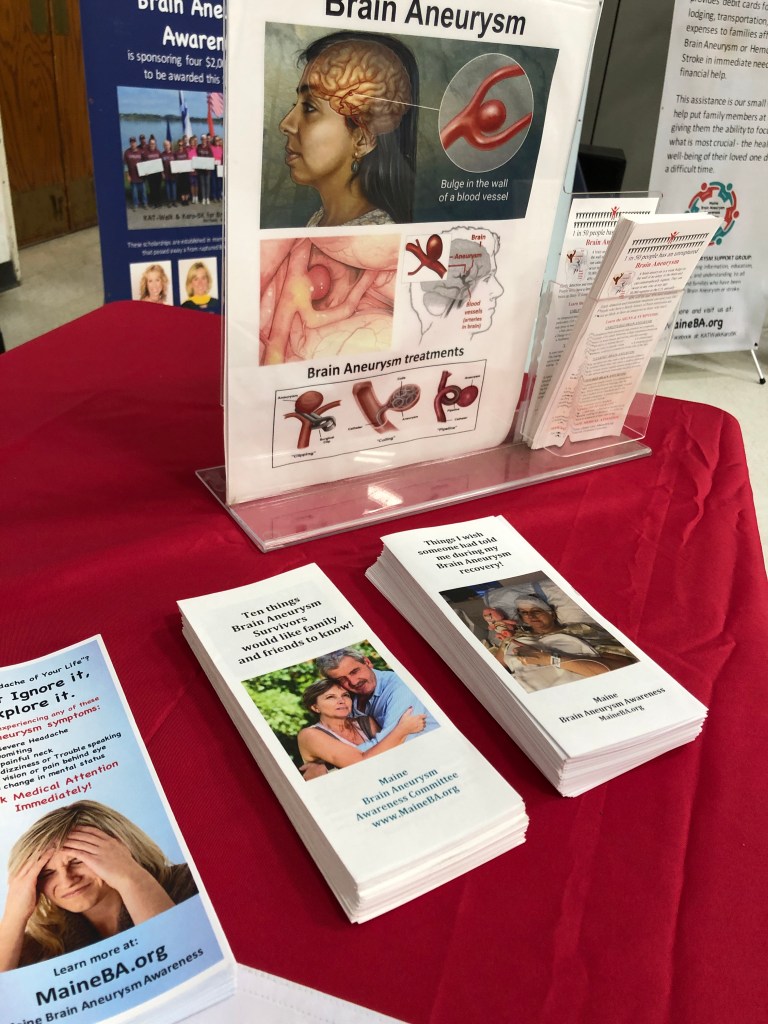
The general public and other vendors appreciated the brochures.

The term “brain injury” encompasses a wide range of issues from mild concussions to debilitating damage from severe trauma, stroke or tumors. The struggles survivors endure can be very similar, but every story, every injury is different and requires different needs. Witnessing the strength and daily commitment of survivors and their caregivings is an inspiration. It’s not easy. It’s frustrating, scary, and complex. Knowing where to go for support and care can improve the daily lives of not only the person who is struggling, but for their families. Events like todays are so important and we were thrilled to be a part of it.

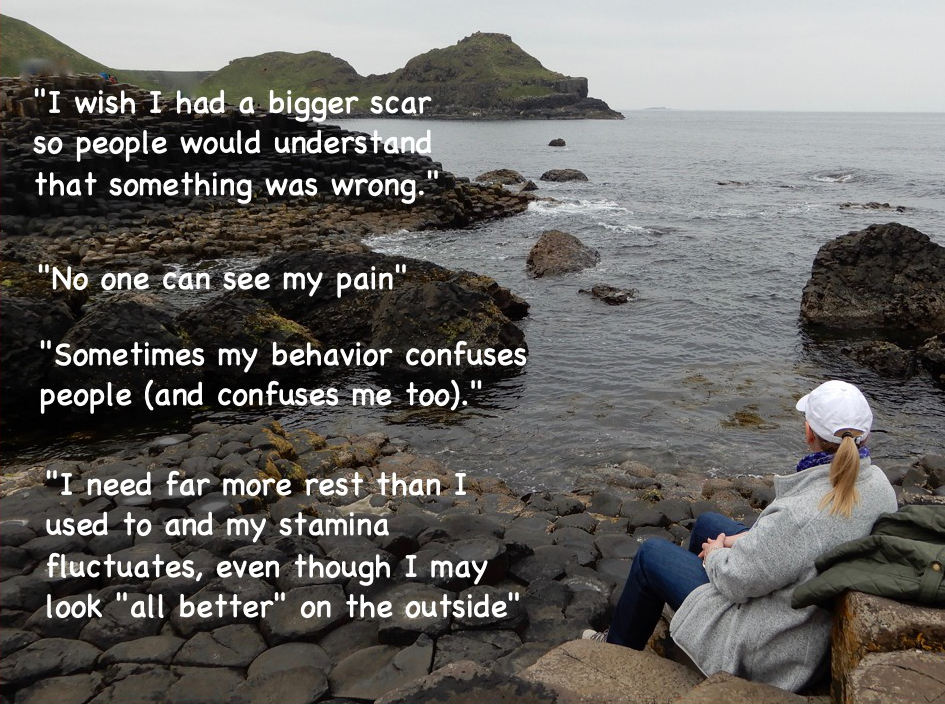
I created this short reel some time ago to highlight some of those struggles survivors deal with.

And the Stories Continue

Five years ago I wrote, what I contend, is one of my more poignant blog posts about all of THE STORIES I have heard about brain aneurysms. Stories from many different people from all walks of life and at very random times. We heard a new one last week.

As my husband and I were in the pre-op area at the hospital waiting for his colonoscopy to begin, the anesthesiologist came in to speak to Dave prior to the procedure, which is normal. As Ron was talking he noticed the brain aneurysm survivor pin that was on my purse and Dave’s KAT-WALK bracelet and asked who was the survivor.

We proceeded to share my story, which was top of mind for both of us because it was 16 years to that day, that I had suffered my ruptured brain aneurysm. Then sadly, Ron told us HIS story about losing his wife to a ruptured brain aneurysm 12 years ago.

Suddenly Dave and I were no longer patients Ron needed to tend to during his daily routine prior to the procedure, but human beings who had both suffered losses due to this horrible disease. Ron leaned over and rested his elbows on the metal railing of the hospital bed and proceeded to tell us the sad story of his wife, his children’s reactions, the day it happened, the treatments involved at the time, and the tragic outcome.

Obviously, for Dave and I, we could relate to Ron’s pain and the suddenness of losing someone to a rupture brain aneurysm. Ron even mentioned meeting someone else who survived and how that person had survivor’s guilt. I too, have suffered from that.

Dave wears his KAT-Walk hat and bracelet almost daily and I always have my survivor pin on my purse. These pieces of “swag” can result in moving stories of sadness and triumph from complete strangers. Stories we never would have known had they not seen the small trinkets and asked about them.

Five years ago I wrote that blog post because of the anniversary of my sister’s death. This year was the 10th anniversary of her death. 16 years ago last week, I celebrated my annie-versary of my rupture. That is MY story, but there are so many others out there and we continue to realize the importance of sharing them.

Ron congratulated me for surviving multiple times and said I “looked great’, which was very sweet considering he had never met me before and had just shared, what I am sure, was not an easy story to tell. We shared our sympathies with him and thanked him for taking the time to tell us about his wife.

All of these stories are meaningful. All of these stories effect us. And all of these stories get added to the long list of people we have met over the years who have been effected by brain aneurysms.

Medicine for the Brain

I discovered last night that laughter can be exhausting for a brain 3-weeks out from receiving more metal. More to the point, laughter for 90-minutes straight is exhausting. But it was so worth it as we enjoyed a rollicking night of improv at the Waterville Opera House. Fans of the television show “Whose Line Is It Anyway” will recognize the touring show called “Whose Live Anyway?”, which includes many of the same performers seen on the TV show but performing live. They did NOT disappoint.

Prior to the show we enjoyed a tasty dinner at a Greek restaurant down the street from the theater. It was the first time we’ve been out to eat in a legit restaurant for long, long time. The restaurant was full up with other attendees for the show and the background noises and activity stimulated my brain for sure. THEN add 90-minutes of solid laughter and needless to say the nerve endings in my brain were WOUND UP.

I know the saying is “Laughter is the best medicine”, but I was curious as to what the science was behind that. According to the Mayo Clinic

Short-Term Benefits of Laughter Can:

  • Stimulate many organs. Laughter enhances your intake of oxygen-rich air, stimulates your heart, lungs and muscles, and increases the endorphins that are released by your brain.
  • Activate and relieve your stress response. A rollicking laugh fires up and then cools down your stress response, and it can increase and then decrease your heart rate and blood pressure. The result? A good, relaxed feeling.

Long-Term Benefits of Laughter May:

  • Improve your mood. Many people experience depression, sometimes due to chronic illnesses. Laughter can help lessen your stress, depression and anxiety and may make you feel happier. It can also improve your self-esteem.

So, it’s no wonder I seek out two of my favorite situational comedy television shows time and time again when I’m feeling down or stressed: “I Love Lucy” and “Friends”. They’re both a sort of “comfort food” for me. They’re familiar, they’re still funny even after seeing them multiple times, and they provide a respite from whatever is going on my life and brain. I also prefer funny plays, musicals, movies, and television series over the more serious criminal dramas. There is enough hate and killing in the world – let me find the humor and love instead.

I am also reminded of what my late mother used to tell me every day before leaving for school: Have fun!”. I certainly try to. I certainly try.

To bring a little laughter into YOUR lives, here is a short clip of some of the best lines from Season 2 of “I Love Lucy”. Enjoy, laugh, and HAVE FUN!