Kick The Can

Well, after meeting with my neurosurgeon this morning we have decided to kick the can for another year on the blood remnant in my large brain aneurysm. Yes, it’s there, but it doesn’t pose any immediate risk at the moment – they think.

Options currently presented are:

  1. Do nothing and observe with periodic angiograms/MRA’s.
  2. Insert more coils (I have 20 already) into the aneurysm in hopes no more blood gets in.
  3. Block off the affected artery and see if the blood flow reverses.
  4. Place the relatively new Pipeline™ Embolization Device INSIDE the existing stent that was place in the artery in 2011.

Here is how we’re addressing each option:

Watch & Wait: Simply monitor the remnant with periodic angiograms and/or MRA’s. Then if it appears it IS growing and more blood is getting back into the aneurysm, THEN we act. It could do nothing for 10 years, or it could double in size by next year.

More Coils: I already have 20 coils and a stent that is supposed to be blocking blood getting into the brain aneurysm. Obviously, they’re not doing their job as hoped and expected.

Sacrifice the artery where the aneurysm is & reverse blood flow: This procedure will require doing a balloon occlusion test first to determine if my vascular system can handle the blood flow being shut off. IF the balloon test is successful, then I would be a candidate for having that “diseased” part of my artery completely filled with coils and the blood flow would reverse. I’m still trying to understand how it all works.

The Pipeline inserted inside existing stent: The doctor had done some research and this specific procedure has only been done ONCE, at least in the U.S. that he is aware of. Not exactly a glowing recommendation. Even one of the most renowned neurosurgeon’s in the country has shied away from doing it.

It’s pretty safe to say we have ruled out options 2 and 4. Adding more coils doesn’t seem like a more durable option at this point and even though the Pipeline has been used VERY successfully throughout the entire country, including here in Maine by my doctor, the lack of data and positive feedback on inserting one into an existing stent doesn’t bode well for its use in my specific situation. I’d rather not be a test subject unless all other options have been exhausted.

So, we’re going to do a combo of 1 and 3. Well…at least #1 at this point.

Blood Supply To The Brain

I’ll have an angiogram next Spring AND have the balloon occlusion test done at the same time. There are four main arteries supplying blood to your brain. In most people, there are links between these four arteries that allow for one of the arteries to be blocked without significantly affecting the amount of blood reaching the brain. The balloon occlusion test is usually done if there is an abnormality (in my case, an aneurysm) in one of the four main arteries. It is a way to see whether one artery can be temporarily or permanently blocked without significantly affecting the level of blood in your brain. An X-ray and a special dye are used to create images of your arteries and a small balloon, which when inflated will temporarily block your artery. Sounds scary, but if you’re on the table in the hospital already, they simply deflate the balloon if you’re unable to handle it.

The angiogram will allow us to see if the remnant has grown in a year and we’ll have the balloon test done and that will determine, should I NEED to treat the remnant, that blocking the artery and reversing the blood flow is a good option. If I’m unable to handle the test, then that’s another option off the table.

There is another potential, more invasive option, but I’m not even going to go there yet. We’ll wait a year, see if the remnant has gotten any bigger, and DOES need treatment, before we address it further.

So, I’ll continue to eat better, try to get more exercise, and reduce stress……the last one will be the hardest I think. Kick the can….



Reminders

Our monthly brain aneurysm support group meetings are a wonderful way for survivors, their supporters and for those who have lost loved ones to come together and discuss this horrible thing that connects them. The fantastic medical professionals who have come to speak with us have opened the eyes of those who haven’t been educated themselves and have helped supporters gain a better understanding of what their loved one has gone through. I rarely come away from the meetings feeling anything other than positive energy and proud of the group, but tonight was different.

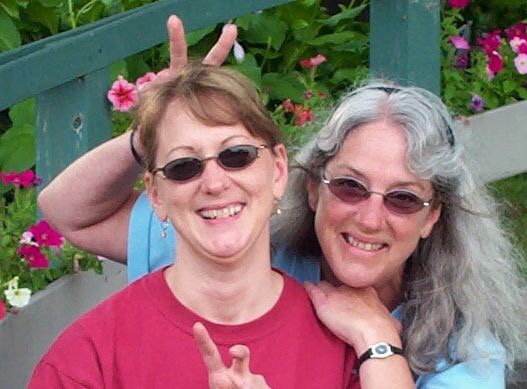
Dori and I in Maine Three years ago tomorrow, we had to say goodbye to my sister Dori. Her rupture was massive and deadly. She ruptured on Mother’s Day and was kept on life support until the 29th of May. No signs of life and no signs of recovery were recorded. They had shaved her long, thick, mostly gray hair from her head completely. She was on life support, a ventilator, and had a drain set up to alleviate and remove fluid on her brain. It’s an image that still haunts me as the last time I saw her.

Some of our discussions this evening at the support group centered on drains and locations of brain aneurysms. Dori’s aneurysm ruptured on her brain stem, which was catostrophic. As these discussions took place tonight with a survivor who had a drain and a rupture, the image of Dori in that hospital bed was running on a loop in my head. I’m glad we flew back from London immediately to see her at the time, but it technically wasn’t her in that bed. She really was gone the day of the rupture but I see her in that bed this week and my heart hurts because I miss her so very much.

I know for those who have lost a loved one, the support group can be sad, educational and scary all at the same time. Usually I’m naturally focused on the survivor side of it because I am one, but unfortunately, I also have the flip side as part of my life in losing my sister and Dave’s niece to massive ruptures. The successes (me surviving I guess) don’t quite balance out the failures (losing Dori and Kim) but life still goes on around us and I’m still alive to try and help others if I can. If we’re able to get one person scanned or help one survivor understand their situation better and offer comfort, then those lives lost will always be with us as a reminder at how precious life is and how we all can DO something.

Checkup Scheduled

My angiogram to check on my aneurysms has been scheduled for February 18th. Of course, I’ll be nervous the day of the procedure hoping that all goes well and all looks good.

Thankfully the angiograms at Maine Med aren’t the all day events like they used to be. They have improved the tools & procedure and you no longer have to lay completely still and flat for hours and hours afterwards. There still is a significant recovery period, but nothing like it used to be.

However, I’ve had so many angiograms since 2006 that the initial puncture is quite painful due to scar tissue in those exact spots I think. I usually ask for extra meds as a result.

I have to get some labs done next week. Been there…done that!

Celebrating My Brain Bling – Year 1

Sung to the tune of “The Twelve Days of Christmas” starting with the 4th day….

“On the 17th of January my neurosurgeon gave to me:

  • 53 dissolving sutures
  • several plates and screws
  • one titanium clip
  • and a dent in the side of my head.”

Yep…that’s what happened a year ago today when I had my 2nd brain aneurysm surgically clipped. It hadn’t ruptured, which was a far different situation from my other aneurysm rupturing in 2006. This second aneurysm, although a riskier procedure, was more of a preventative. Because I’m susceptible to ruptures, lost my sister Dori to a ruptured brain aneurysm that was about the same size, and this second one was starting to grow, everyone felt it was in my best interested to go ahead with the procedure. Get the darn thing before it got me.

Now, don’t get me wrong…the decision was not an easy one and one I didn’t take lightly. Not only did I know the risks going in, but I also knew how the decision and any possible bad outcome would effect my family. That being said, once I DID make the decision, it was “LET’S DO THIS!”. I wanted it done sooner, rather than later, but my work schedule prevented a quicker date with the surgeons.

Having a doctor who you have confidence in and who has been inside your brain before was a huge plus. He didn’t force me to have the surgery. I could have waited if I wanted to, but I think we both knew my specific risk factors were significant enough to have the surgery. I already have 20 coils and one stent in the other brain aneurysm – what’s one more tiny clip and a few pins and screws?

I won’t go through the minutia of the surgery again as it has already been well documented in this blog, but I’m doing well. I still have issues with fatigue, my scalp feeling numb and odd aches and pains on my skull from time to time when I got overly tired or for other reasons I have yet to determine. Open brain surgery is very scary and certainly risky. I’m one of the lucky ones. Even with the dent and bumps in my head, the alternative is worse for everyone in my life.

Me! Brain Aneurysm Survivor
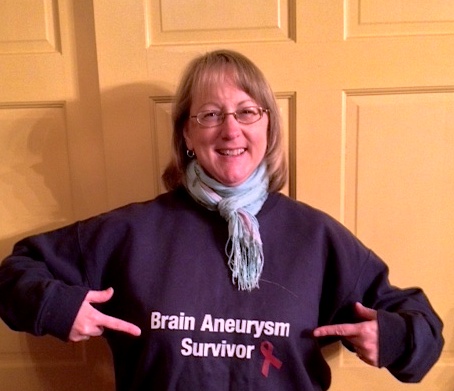
I have a “Brain Aneurysm Survivor” sweatshirt that I wear occasionally. Some people might find that self-promotion a little tacky. If a breast cancer survivor walked by me with a shirt saying ‘Breast Cancer Survivor”, I’d give them a thumbs up, perhaps a hug, and certainly congratulate them. I don’t EXPECT any response when I wear my sweatshirt, but it’s something I’m proud of and if it initiates a conversation with someone who may not have a lot of knowledge of brain aneurysms, perhaps I can even save a darn life.

So, on today’s 1st anniversary of my newly acquired brain bling, I don’t know what to call it. My previous anniversaries I have call my “annie-versary”. Annie for aneurysm…get it? But what does one call the clipping anniversary. A clip-aversary? A craniot-iversary? A bling-aversary? I guess I’ll just called it “a year out” and wear my “Brain Aneurysm Survivor” sweatshirt to work.