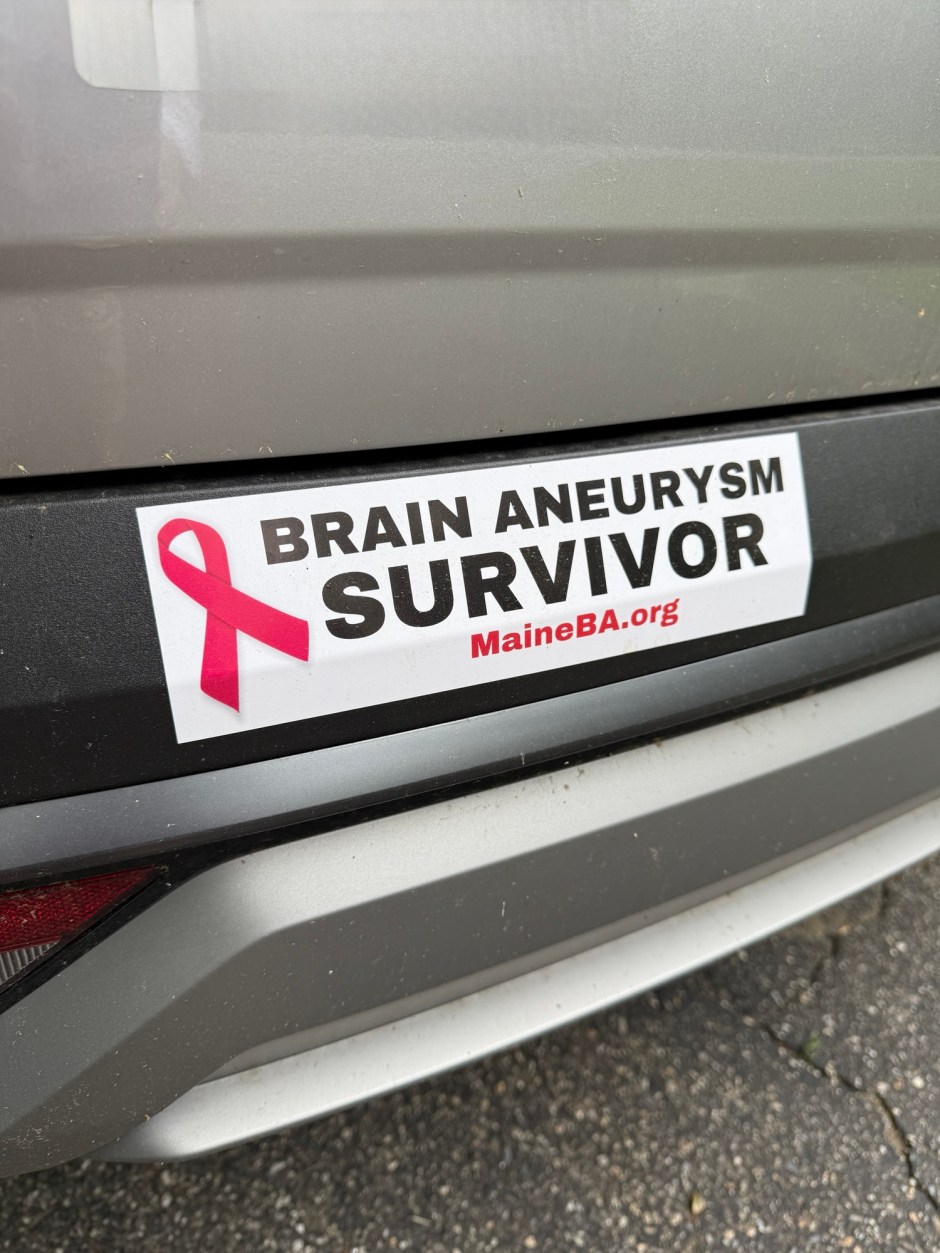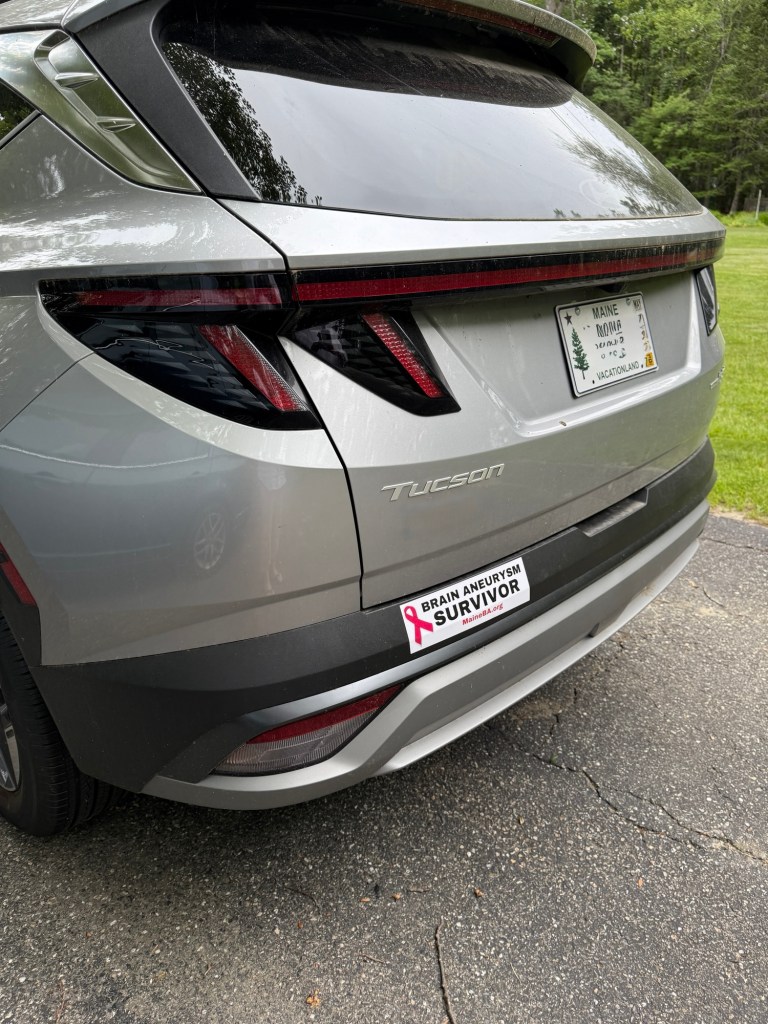
I’ve had a “Brain Aneurysm Survivor” bumper sticker on my cars for many, many years. I find it can drum up conversations with people on occasion. The same thing with my survivor button on my purse. I forget it’s there and some random person will see it and tell me about their survival, or a family member or friend who survived, or sadly did not.
This year I had some new ones made with our URL (MaineBA.org) on it. I’m not happy with the colors on it, but it’ll do. This past weekend I went grocery shopping with said new bumper sticker on my car. As I pulled into my spot, another white car was backing in the spot immediately next to me. A little too close, so he pulled up and re-backed the car in, which I was thankful for.
As I waited to him to park and exit his vehicle, I gathered up my purse and shopping bags. After he got out, I started to open my door and noticed in my side-view mirror that he was taking a photo of the back of my car before he continued on. My first thought was “Uh, oh!” that I cut him off in traffic or something and he was recording my license plate number, then I realized he had the camera pointed down on the bumper and was taking a photo of my bumper sticker. At least that was my assumption.
My bumper sticker
Because he had a little boy with him and seemed in a hurry to get into the store, I never caught up with him again in the store because groceries is still an “adventure” for me, and by the time I got out back to my car, his car had left. So, I’ll never know.
HOWEVER, I hope it was someone local. I hope they went to our website and found the information they were looking for, for themselves or a loved one and found it useful and comforting. THAT is why I “advertise” that I am a brain aneurysm survivor on my car and my purse. You just never know who it may attract and the conversations it can fuel and help.
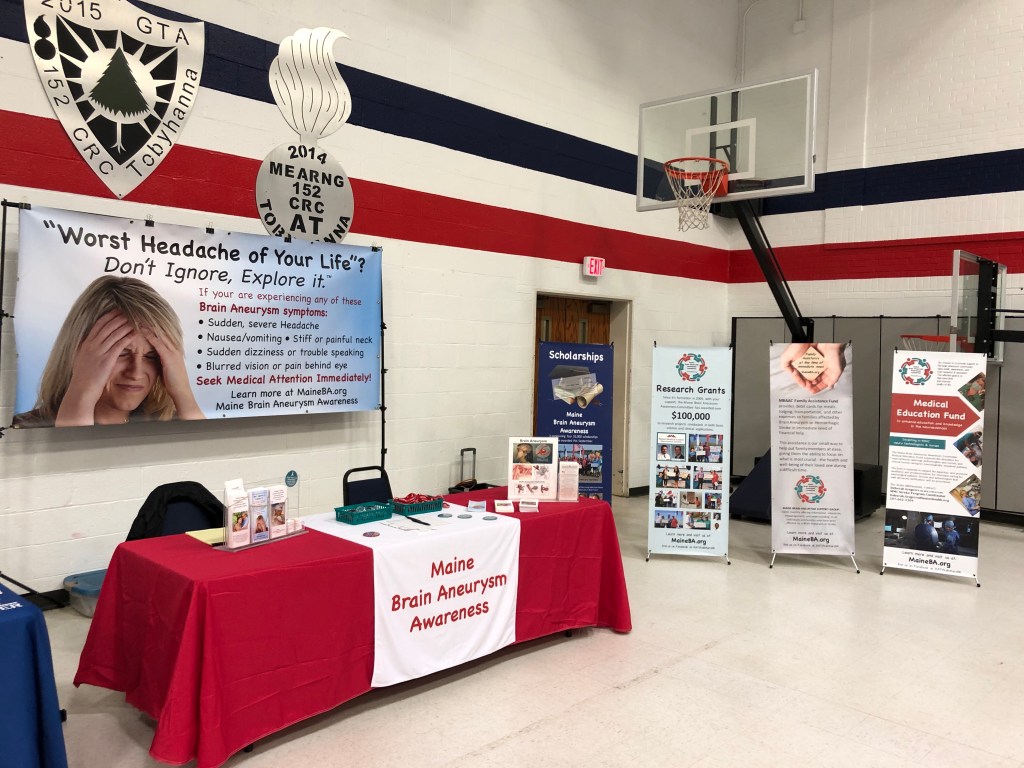
Yesterday, Dave and I spent the afternoon at the Brain Injury Resource Fair in Augusta, Maine. This annual event, sponsored by the Brain Injury Association of America – Maine chapter, was the first held since the pandemic. Our brain aneurysm group had a table along with many, many vendors from different areas of Maine and New England.
The program director of the Maine chapter of the BIAA is headed by Sarah Gaffney who is a spark plug of encouragement and energy. As usual, she and her team did an amazing job with this event. Sarah’s advocacy is motivating and impressive. I was honored when she asked me to tell my story in their November 2020 newsletter.
Dave and I had to shake off some of the cobwebs while setting up our many banners and table-top displays as it has been so long since we have attended any indoor events like this. It felt good!
We might be a small group, but our presence was mighty! 🙂
It was wonderful to see so many familiar faces in person and reconnect with some of the many, many people whose daily focus is to assist the brain injury community here in Maine.
These events are always a challenge for me, mainly because I’m better with faces, but horrible with names. Dave, on the other hand, has a great memory and all of his faculties when it comes to matching names to faces. I didn’t see much of him during the 3-hour event because he was busy catching up and networking with other vendors around the large arena at the armory. This is one of THE best events in the state for doing that.
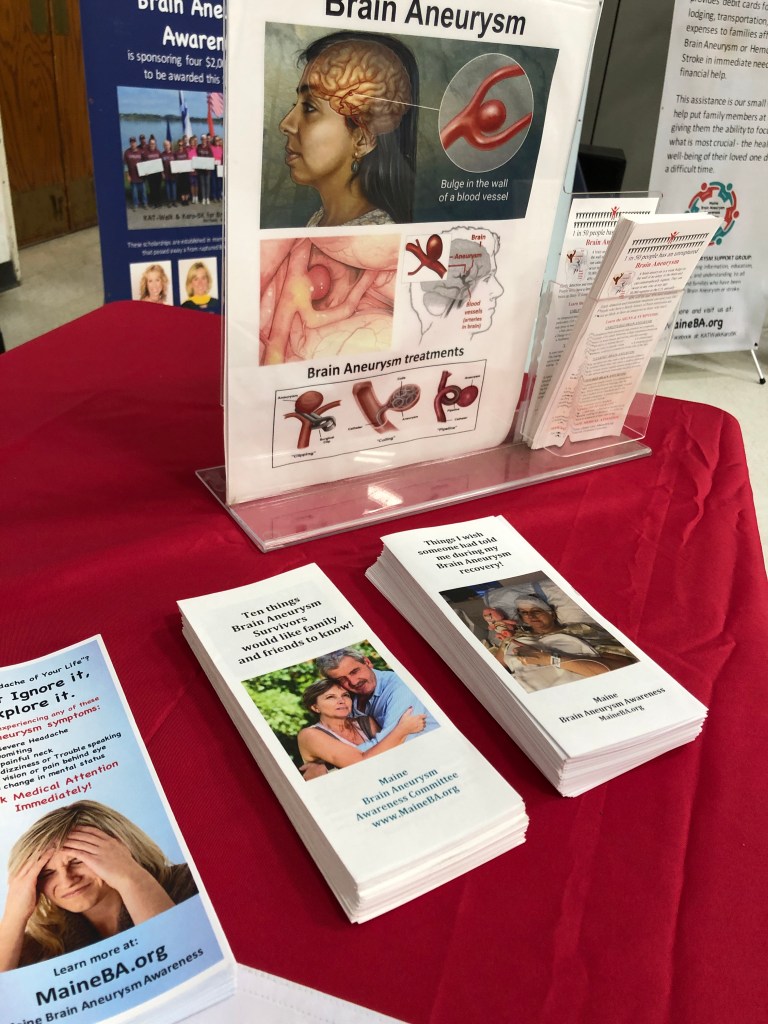
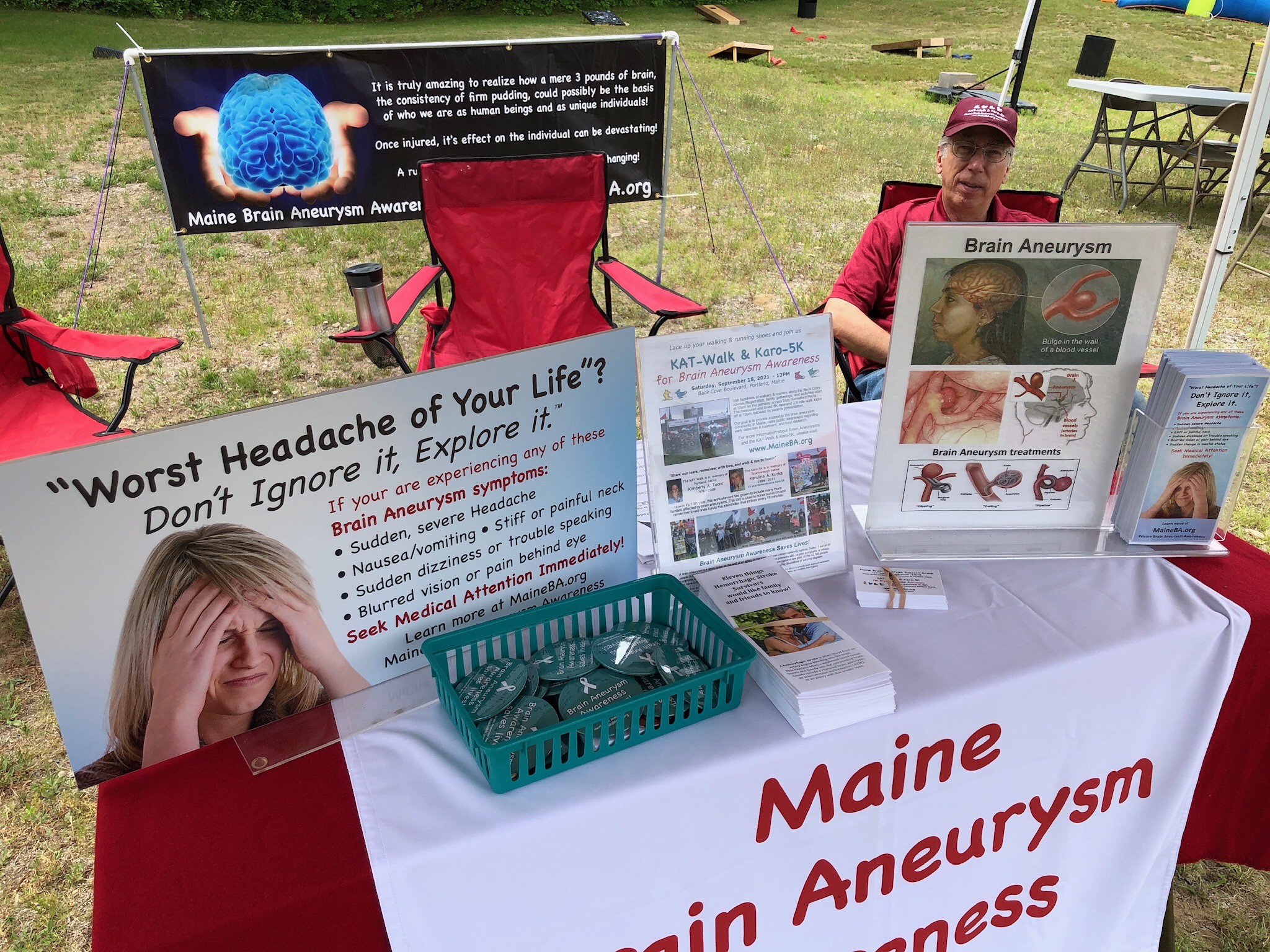
We got reacquainted with our table displays again.
As the general public started to arrive, you’re quickly reminded why we were all there: to offer much needed education, outreach, information, and resources to those who desperately need it.
I do relatively well when people ask questions regarding brain aneurysms, but when a question is thrown my way that I wasn’t expecting and haven’t had to answer before, I can often struggle. I feel bad I may not give the answer the person was looking for, but I try my best. Dave is much better at that than I am. When I get tired, I can also start to fumble with my words. But I think I’m among friends here who are more forgiving.
Every type of brain injury is represented at this event and every type of service can be found, but knowing where to look is one of the biggest problems, especially in such a rural state like Maine.
Since the pandemic, our brain aneurysm support group has only been held virtually, via ZOOM. So it was wonderful to meet two newer members of our support group in person today for the first time as well as meeting one of our previous speakers in person. I’m very proud of our small group. I KNOW we’re doing good work and today only validated that. If we can help one person feel better, find resources, or navigate a challenge, it’s all worth it.
The general public and other vendors appreciated the brochures.
The term “brain injury” encompasses a wide range of issues from mild concussions to debilitating damage from severe trauma, stroke or tumors. The struggles survivors endure can be very similar, but every story, every injury is different and requires different needs. Witnessing the strength and daily commitment of survivors and their caregivings is an inspiration. It’s not easy. It’s frustrating, scary, and complex. Knowing where to go for support and care can improve the daily lives of not only the person who is struggling, but for their families. Events like todays are so important and we were thrilled to be a part of it.
I created this short reel some time ago to highlight some of those struggles survivors deal with.
We spent the day yesterday down in the beautiful coastal town of Wells in the southern Maine attending a fundraising event for a Well’s resident who suffered a ruptured brain aneurysm in March.
Due to Covid19, our MBAA group have not attending any of our usual brain conferences, fairs, and support events since March of 2020. So, we were looking forward to pitching our tent once again. And hugging! There was hugging!
About two weeks ago, I saw a news report on TV about fundraising efforts benefiting Bob Hoffman, who along with his wife, and another couple, own and run the Living Wells Farm, a horseback riding and boarding center. Bob suffered a serious brain aneurysm rupture in March and continues to heal with rehabilitation therapy at home.
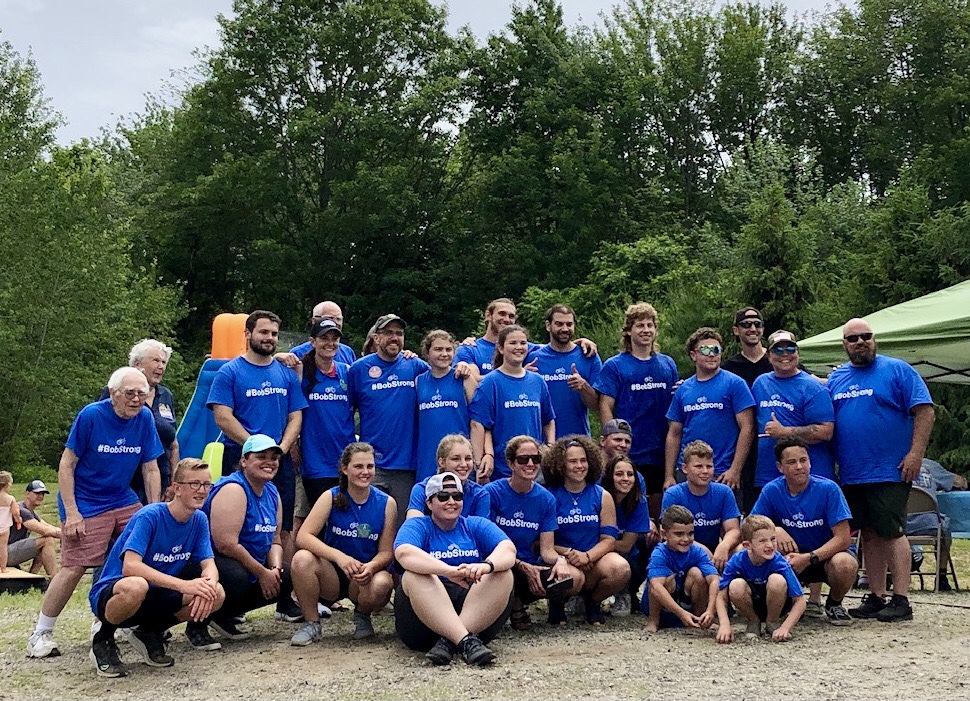
Once we saw Bob’s story, we wanted to make sure he and his family were being looked after and had all the information and medical assistance they needed during this critical recovery period. The #BobStrong Fundraiser offered the opportunity to introduce ourselves and offer our help in anyway.
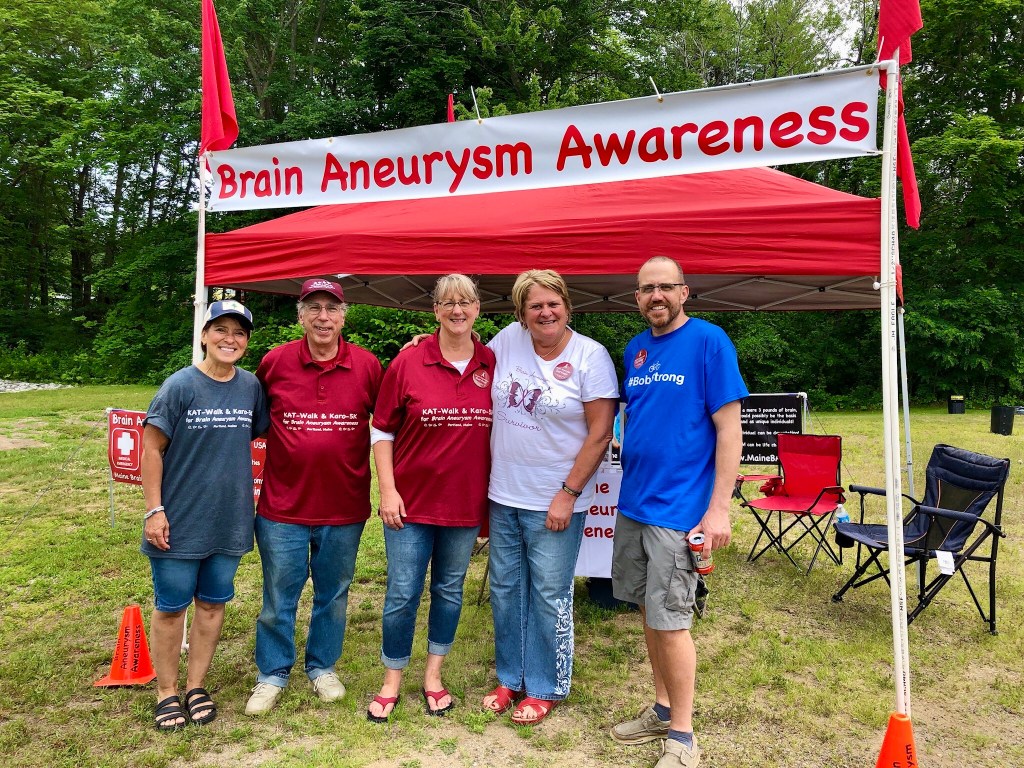
A small segment of the #bobstrong team
We contacted Katie from CrossOver Fitness Maine who, along with her husband Andre, were organizing the event for Bob at their fitness center in Wells. Thankfully, there was a quick response which also led to Bob and his wife attending a timely brain aneurysm support group meeting with us over Zoom this past week.
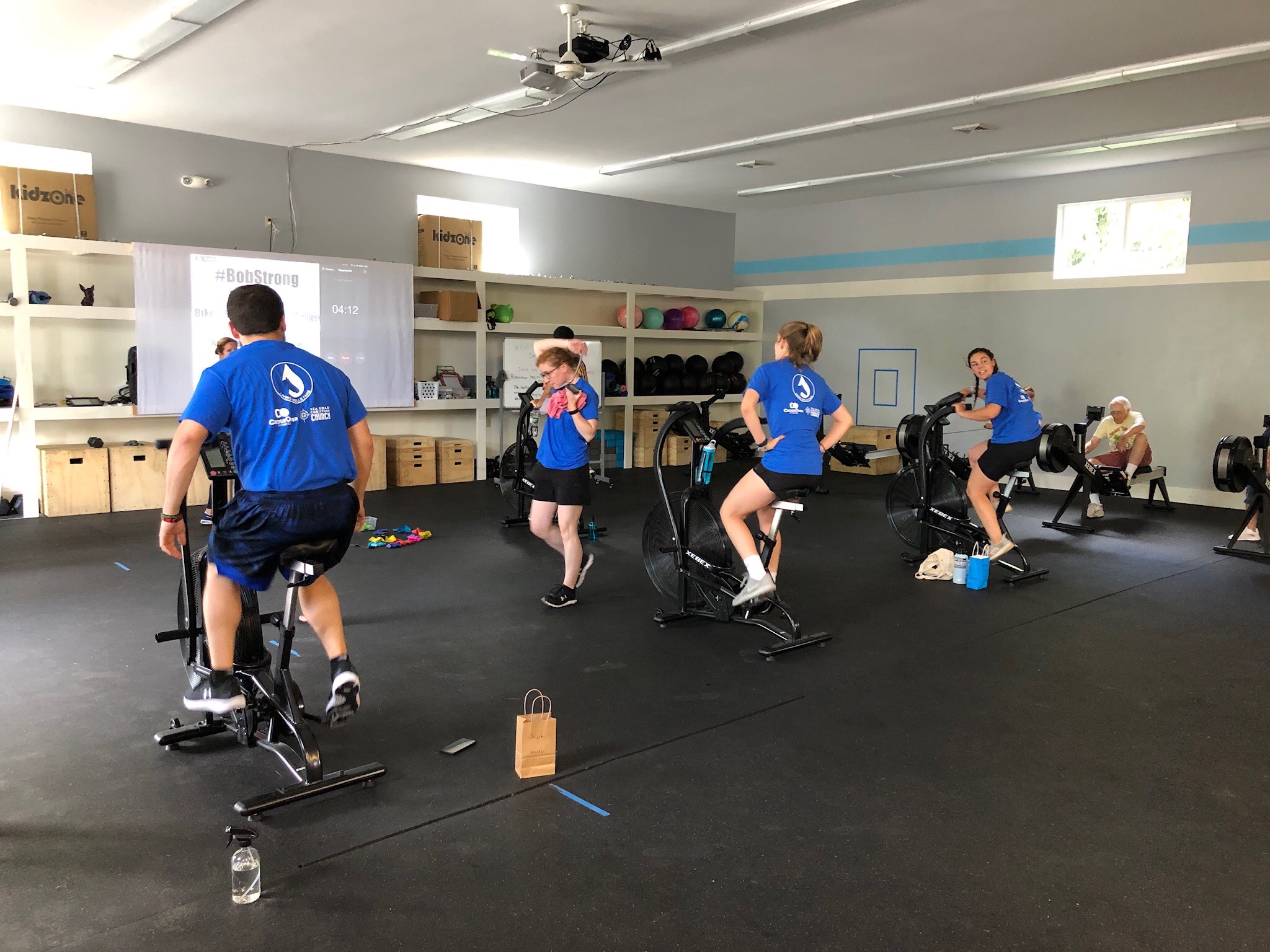
A cookout, bike-a-thon (31 miles!), and indoor cycling/rowing all took place
It’s so important for survivors and their caregivers to know they’re not alone during these critical periods of after-care and healing. We were really please when Bob and Amanda showed up on our computer screens for the support group.
Everyone is different. Every aneurysm is different. And everyone responds to a ruptured brain aneurysm differently. Some are receptive to help, others can walk out of the hospital on their own and never look back or look into what may have caused the aneurysm and how it has effected their brain and their families. You can lead a horse to water, but you can’t make him drink. You can lead a survivor/caregiver to a support group, but you can’t make them share their story or be open to receiving assistance and education.
Thankfully, Bob and Amanda were receptive to our group and were engaged and open with us. We were also highly impressed with the path to recovery Bob is currently on and the services he has been offered through some very tenacious efforts by Amanda and their rehabilitation center, Rehab Without Walls.
Yesterday’s fundraiser was a beautiful example of a community coming out to support one of their own and how they have wrapped their arms around this young family in their time of need. We met Bob’s parents and children and some of the good friends helping the family on their brain aneurysm journey. I am reminded, yet again, how the physical brain aneurysm happens to one person, but the entire family suffers the results as they are often confused and scared by all they have seen.
Knowledge is power. The more you know.
Our group tries to assist survivors and families in understanding the recovery period and what one can expect. We NEVER give them a timeline on when their recovery will be complete. No one can tell you that. But, if you put in the time and educate yourself on how best to help the survivor, it can make that journey easier and perhaps quicker to achieve better results.
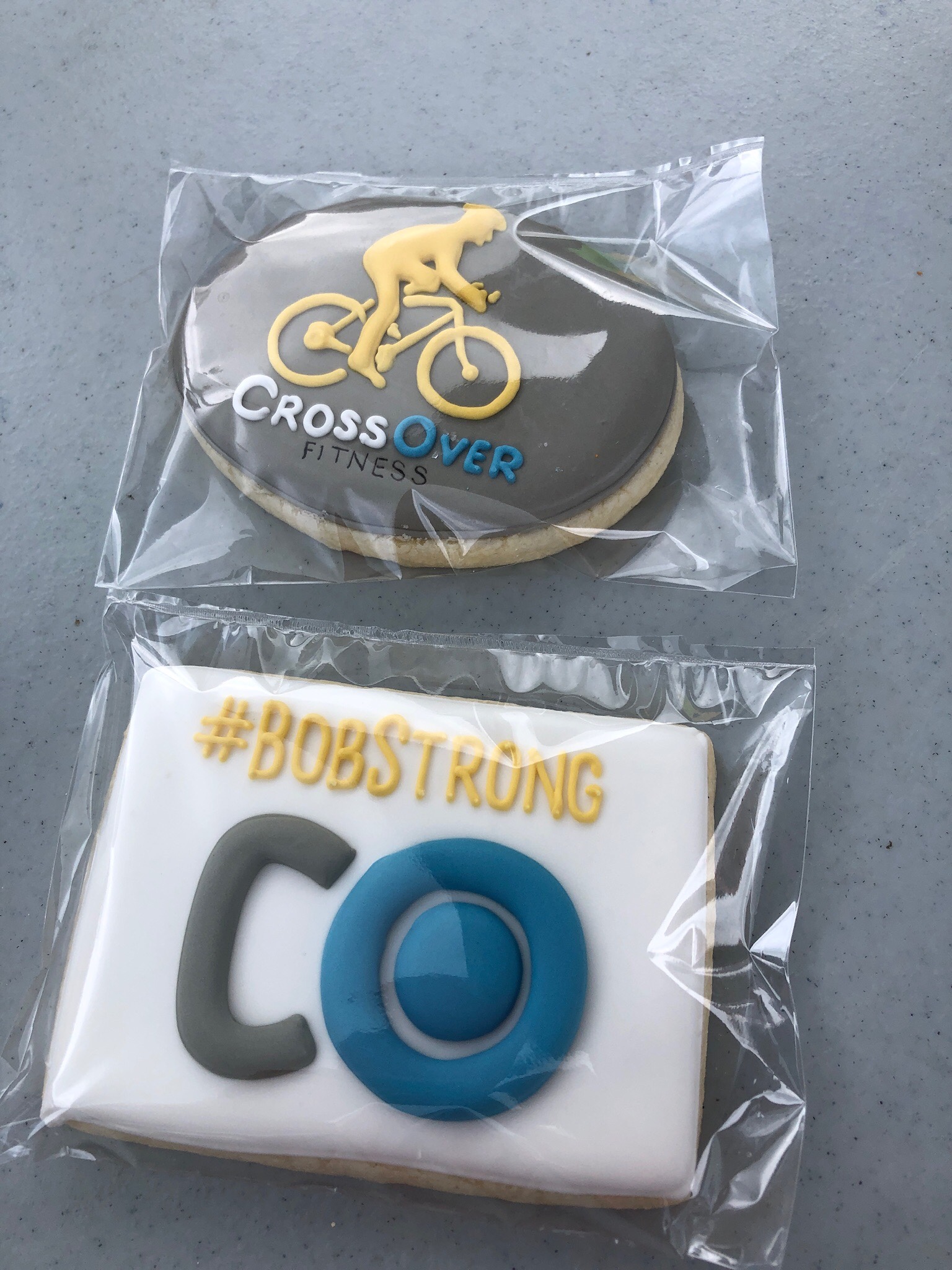
#BobStrong t-shirts and some amazing cookies made by local bakery Mainely Cookies
Dave and I were joined by two of our committee members, Amy and Linda for the day and we were impressed by the over 200 people who participated throughout the day and brought such a loving and caring attitude. We were asked many questions and met a few people who had also been touched by brain aneurysms in their own families.
Linda, Dave, Heidi, Amy, and new survivor, Bob
Bob is a very fit and strong individual. Both of those traits should benefit him greatly during recovery, but it’s not a quick process. Reading my own blog from my first few months is a quick reminder of how frustrated and depressed I got. Having that strong support group around you is a huge benefit and I think Bob is one very lucky man after what I experienced yesterday.
Spending the day with Linda and Amy also allowed us some catch-up time and the chat was mostly about our experiences with brain aneurysms and our combined efforts in the state to educate people. I have something in common with both of them: Amy is also a survivor and Linda lost two loved ones to brain aneurysms – both of her parents. It’s interesting how easy it is to discuss these difficult topics when you know the person you’re speaking with has also endured similar difficult experiences.
Linda, Dave, and Amy
It felt GOOD to be out there doing GOOD again. It felt GOOD to load up the car, pitch that tent, lend a helping hand where we could, and hug people again.
Our group held its second brain aneurysm support meeting tonight since the start of the pandemic. Held outside, with proper spacing, and all wearing masks, we enjoyed a stunning, summer evening in Portland.
July brain aneurysm support group meeting
There are regulars who attend the meetings every month and there are those who try to attend when they can. So, we never know who is going to attend each month. Sixteen people attended tonight with two new survivors and a neuro nurse who brought a unique perspective to the group.
At last month’s meeting, our first since February, our group facilitator asked us to find something positive that has happened during the pandemic instead of trying to focus on all the negatives…because there certainly are a lot. It was a wonderful idea and gave us a chance to catch up with one another. I don’t believe the words “brain aneurysm” were even mentioned that evening. We left feeling “good” and grateful for those positives we were able to mention no matter how small they might have been.
Tonight we were asked to share something we have done this summer that has allowed us to get away from the chaos and uncertainty. We also went around the “room” and shared our brain aneurysm stories again. With new people in the group it can put them at ease to hear other’s stories, know they’re not alone, and it allows us a chance to offer advice and comfort if needed.
After 14 of us shared our relationship to brain aneurysms and added our “summer story”, we then met Elizabeth who has been a neuro nurse for over 30 years and who currently works at Maine Medical Center. It was fitting she was the last in the group to share HER story after listening to all of OUR stories.
She was not a brain aneurysm survivor and didn’t have a relative who had a brain aneurysm, but because of the field she is in, Elizabeth has seen the effects that a brain aneurysm can have on patients and their families at their most vulnerable stages: admittance to the hospital and during emergency and elective medical procedures.
What she does NOT see is how those patients fair once they leave her care and guidance in the neuro ward. So, tonight it was an eye-opening and rewarding experience for her to hear from survivors themselves, how they’re coping, how they’re surviving and thriving after their first, second, and sometime’s third experiences with brain aneurysms.
Elizabeth eloquently shared her feelings regarding our group and the survivors who shared their stories and how it gave her a new perspective and insight into healing and recovery. A perspective she never would have got had she not joined us tonight.
It also dawned on all of the survivors that, of course, a nurse who cares for these patients for a brief period during the ugliest parts of the patients experience would wonder how is that patient doing now? How is their family coping with this trauma? Did they regain their memory? Were they able to walk again? One forgets they must see patient after patient and not really get any kind of resolution or closure because THEY aren’t the ones who meet us during our followup appointments at the neurosurgeon’s office.
Elizabeth also shared that they don’t really remember the type of brain aneurysm we had, or its location, but they DO remember the family and the people around the patients and perhaps their initial struggles. She remembers the patient…not the medical condition.
What an eye opening perspective for us all to hear. We thanked HER for sharing that perspective and she thanked US for allowing her to hear our stories about our lives and healing after our initial brain aneurysm experiences. She also realized that the healing and PROGRESS can occur well after one or two years.
Many survivors are told they’ll be healed and back to “normal” in a year or two or that after two years, you got what you got. Many survivors also know this is NOT the case. You may look normal, but your brain can still be struggling with many, many different smaller deficits that, in time, WILL and can get better. But it takes time…lots of time.
I am so glad Elizabeth and the new survivors joined us tonight and shared their stories. It’s a good reminder of how fragile life is and those stories continue to inject new perspectives on SURVIVING and THRIVING with brain aneurysms.